





Introduction: Why and How to Get a Work Permit in Brussels
Getting a work permit in Brussels is a key step for any non-European who wants to work in Belgium. Brussels, the European capital and a multicultural economic hub, attracts skilled workers, professionals from international institutions, startup founders and artisans every year. But the variety of statuses (posted workers, local contracts, international assignments, self-employed) and the number of administrations involved can make the process confusing. This guide aims to clarify the steps, required documents, offices to know and practical costs so you can plan and move forward confidently.
Belgium distinguishes several types of permits depending on duration, the worker’s status (employee, self-employed, trainee) and nationality. Citizens of the European Union/EEA/Switzerland benefit from freedom of movement, which largely simplifies access to the labour market. For third-country nationals (non-EU), however, you will often need a standard work permit (sometimes referred to as a type B or C permit or a specific authorization) and a residence title. Brussels — which acts as a Region, a set of municipalities and the seat of federal institutions — involves different interlocutors: the regional employment office (Actiris), the Federal Public Service (FPS) Interior – Immigration, municipal town halls for registration and sometimes the FPS Economy or the National Employment Office (ONEM/ONSS) for certain formalities.
This guide, focused on Brussels (City of Brussels and the municipalities of the Brussels-Capital Region), gives you a practical roadmap: what paperwork to prepare, where to submit an application, typical fees, opening hours and addresses to remember, plus local tips to save time. It also includes exact addresses and opening hours of the main offices, concrete examples of documents to prepare (employment contract, certifications, proof of residence), and tips to avoid common mistakes. Even though some procedures can be done online, visiting certain counters is still often necessary — for biometric recordings or collecting a residence card, for example.
Before diving into the detailed steps and documents, note two practical tips: first, start early — processing times can range from a few weeks to several months depending on the permit type and administrative load; second, keep both paper and digital copies of every document you submit (contracts, receipts, emails) and always ask for a receipt or a file number. In emergencies or when language is a barrier, many Brussels organisations offer support in English, French and Dutch, and sometimes in Arabic or Turkish.
Throughout this guide you’ll also find concrete pointers: addresses like Actiris – Boulevard du Jardin Botanique 50, 1000 Brussels, or the relevant federal service, and cost estimates for administrative fees, stamps or the residence card. Fees and opening hours can change: always check online or call before you travel. Finally, many employers cover most of the procedures and fees — make this a clear point to negotiate in your contract. Now let’s get into the practical steps, required documents and places to know to obtain a work permit in Brussels.
Step 1: Check Your Status and Which Type of Permit You Need
The first step is to determine your legal situation and the type of work permit that applies. If you are a citizen of the European Union, the European Economic Area (EEA) or Switzerland, you generally do not need a formal work permit; however, you must register with the municipality where you live and, depending on the length of stay, apply for a residence card (Annex 8 for stays over 3 months). For third-country nationals, the permit type depends on the duration and nature of the work:
- Type C permit: often for seasonal or short-term workers (a few weeks to a few months); it is tied to a specific employer and is typically requested by the employer.
- Type B permit: generally required for salaried work in Belgium for a fixed or indefinite period. It is linked to a specific employer; the employer must apply to the competent authority on your behalf.
- Permit for self-employed: if you plan to work as a freelancer or run your own business, the procedure is different: you will need to demonstrate the economic viability of your project (business plan, proof of capital, registrations with professional bodies).
- Specific statuses: posted workers, researchers, international mission staff and students have particular procedures with specific rules on duration and conditions.
It’s essential to check in advance whether the profession you intend to practice requires recognition of qualifications (e.g., medical professions, teaching, architecture). For instance, working as a nurse or doctor requires professional equivalence certificates issued by the competent authorities (FPS Public Health). For construction work there may be safety attestations or specific certificates.
Practical tip: contact Actiris or the municipal employment desk for an initial assessment. Actiris (the Regional Employment Agency for the Brussels-Capital Region) provides practical information and support services for employers and workers: Actiris – Boulevard du Jardin Botanique 50, 1000 Brussels. Usual opening hours: Monday–Friday 08:30–16:30. Phone: +32 2 533 77 11 (check the official website for the latest number before you go).
Step 2: Complete List of Documents Required for a Type B Work Permit (Employee)
For a type B permit, which is the most commonly used procedure by Brussels employers to hire non-EU workers, the file must be carefully prepared. Generally, the application file includes the following items (the list may vary depending on the case):
- Official application form: provided by the competent administration (often the FPS Interior or the regional employment service).
- Signed employment contract: a detailed contract specifying duration, salary, position, working hours. Clearly state the workplace address (full company address).
- Employer statement: indicating the need to hire a foreign national and justification for recruiting from abroad (under certain conditions).
- Copies of identification: valid passport (all relevant pages), and any entry visa if applicable.
- CV and diplomas: certified copies of diplomas, sworn translations if required.
- Proof of accommodation: lease agreement or a host declaration if requested.
- Criminal record: criminal record extract from your country of origin (apostilled or legalized if needed).
- Passport photos: compliant with Belgian residence card standards (usually 35×45 mm).
- Proof of payment of fees: receipt or proof of administrative fees paid (see the costs section).
- Medical form: only in some cases (e.g., health professions or when required by the employer).
It is common for the administration to request additional specific documents: a copy of the employer’s registration with the Crossroads Bank for Enterprises (BCE), proof that the employer attempted to recruit locally (e.g., job advertisement on Actiris), or documents related to social security arrangements. If you are already in Belgium under another status (long-stay visa, student, etc.), include a copy of your current immigration card.
Translations and legalization: documents written in a language other than French or Dutch generally need to be translated by a sworn translator. Some administrations accept translations in English, but it’s safer to check each case. For certain official documents (criminal records, diplomas), an apostille or legalization by the authorities of the issuing country may be required.
Local advice: prepare two complete sets of your file, organize documents with dividers and include a cover sheet listing what’s inside. At the counter, always request a written receipt including the file number and the date of submission. Processing times vary: allow on average 4 to 12 weeks, sometimes longer for complex cases.

Step 3: Where to Submit Your Application in Brussels — Addresses, Hours, Fees
In Brussels, procedures are split between several institutions: the regional employment office (Actiris), the Federal Public Service (FPS) Interior or Immigration, the municipal town hall for registration, and sometimes FPS Economy or ONSS (social security) depending on the case. Here are the main offices and useful contact details:
- Actiris – Regional Employment Agency
Address: Boulevard du Jardin Botanique 50, 1000 Brussels.
Opening hours: Monday–Friday 08:30–16:30 (reception desk).
Services: employment information, recruitment assistance and practical guidance for employers and workers. Phone: +32 2 533 77 11.
Fee: general information is free, but some specific services (training, personalised support) may be charged depending on the program. - FPS Interior – Immigration (Directorate-General)
Approximate address: Boulevard Roi Albert II 32, 1030 Brussels (headquarters and counters linked to immigration; check the official website for the exact address before you go).
Hours: generally Monday–Friday 09:00–12:00 and 13:00–16:00 (slots usually by appointment online).
Services: issuance of residence permits, biometric registration and residence cards. Phone: consult the FPS Interior website for the exact number and appointment procedures.
Indicative fee: issuance of an electronic residence card: around €90–150 depending on the type (verify the exact fee at the time of application). Some procedures may carry specific registration fees (e.g., €116 for certain administrative procedures); amounts vary. - Municipal town hall – City of Brussels
Address: Rue du Noyer 13, 1000 Brussels (Population / Foreigners office).
Hours: generally Monday–Friday 08:30–12:30 and 13:30–16:30 (appointments recommended).
Services: resident registration, identity card or residency certificate (Annex 8 for EU citizens).
Cost: some certificates may have small administrative fees (€5–15). Check with your municipality. - ONSS / Social Security Service
Central address: Boulevard du Roi Albert II 8 / Koning Albert II-laan 8, 1000 Brussels (online consultation is often preferred).
Hours: vary; prefer online contact via the official site or phone appointment.
Services: employer and worker affiliation, social contributions, Dimona declaration (electronic employment declaration).
Cost: depends on the situation (employer and employee contributions are calculated on gross salary).
Important: some counters require an appointment booked online; others accept walk-ins for document submission but you may face long waiting times. Before you travel, always check the official websites (Actiris, FPS Interior, your municipality) for the precise address, appointment rules and documents to bring. Brussels administrations operate in French, Dutch and sometimes English; if needed, ask for an interpreter or language assistance.
Step 4: Processing Times, Detailed Costs and Parallel Formalities (Social Security, Taxes)
Timing and costs are things to plan for so they don’t delay your start date. Here’s a practical overview with estimates and the additional steps you’ll need to take once the work permit is granted.
Average processing times: for a type B permit, expect roughly 4 to 12 weeks depending on the completeness of the file and administrative workload. For complex requests (diploma recognition, regulated professions), the delay can exceed three months. If the employer is an international institution or an NGO, special procedures may sometimes shorten the timeframe.
Typical costs (indicative estimates – verify current amounts before submission):
- Administrative file fees for the permit application: between €50 and €150 (varies by permit type and authority).
- Cost of the electronic residence card: around €90–150 depending on the type of card.
- Legalisation / apostille fees for documents: €20–60 per document depending on the issuing country’s rules.
- Sworn translation: €40–120 per document depending on volume and language.
- Passport photos: €8–15 (photo booth or studio).
Parallel steps to complete after the permit is granted:
- Dimona employment declaration: the employer must declare the hiring of the worker via the Dimona electronic procedure (Onem/ONSS). This step is crucial for social security registration.
- Social security affiliation: ensure your employer registers you and opens your social protection rights (health insurance, pension contributions).
- National identification number (NISS): issued by the social security system; needed for healthcare, banking and tax administration.
- Tax registration: to receive a salary you will need to be registered with FPS Finance (tax identification number); the employer usually supports these formalities.
Tips to reduce waiting times: submit a complete, well-organised file, anticipate translations and legalisations, and negotiate with your employer for them to handle the administrative requests. If possible, request a “deposit receipt” which sometimes authorises you to start work provisionally (depending on the case and permit type) while the final card is being issued.

Step 5: Local Tips, Common Mistakes and Support Resources in Brussels
Brussels has a broad set of reception and support structures for newcomers. Still, common pitfalls keep coming up. Here are practical tips to streamline your application and your professional integration.
- Anticipate translations: have your diplomas and certificates translated and, if necessary, legalized before you leave your home country. Delays due to obtaining apostilled documents are a frequent cause of administrative slowdowns.
- Number and index your files: a cover sheet and an index of documents make it easier for the official handling your case and reduce the risk of missing items.
- Keep a secure digital copy: scan the entire file (PDF) and store it on a secure cloud service — it can save a lot of time if an additional document is requested later.
- Avoid expired supporting documents: criminal record extracts and health certificates often must be no older than three months.
- Pick quiet times: mid-morning (09:30–11:00) and mid-afternoon (14:00–15:30) are often quieter at service counters; avoid Monday mornings and Friday afternoons.
Support organisations in Brussels:
- Actiris (Boulevard du Jardin Botanique 50, 1000 Brussels) offers job search workshops for foreigners, information sessions on employment rights and registration for local training.
- Municipal orientation centres: each municipality has a desk for integration and administrative support for newcomers (e.g., City of Brussels Town Hall, Rue du Noyer 13, 1000 Brussels).
- Local associations: organisations such as CIRÉ (Coordination and Initiatives for Refugees and Foreigners), Red Cross Brussels, and legal aid clinics can help with file preparation or provide language support.
Common mistakes to avoid: forgetting to sign the contract, mismatch between the job described in the contract and the job on the application, lacking a valid proof of address, or using untranslated documents. Also, never pay fees “under the table”: all official payments must be accompanied by an official receipt.
Useful online resources: the official FPS Interior immigration site, the Actiris employment portal, and your municipality’s pages for resident registration. Use online appointment systems to save time and check your email regularly for requests for additional documents.
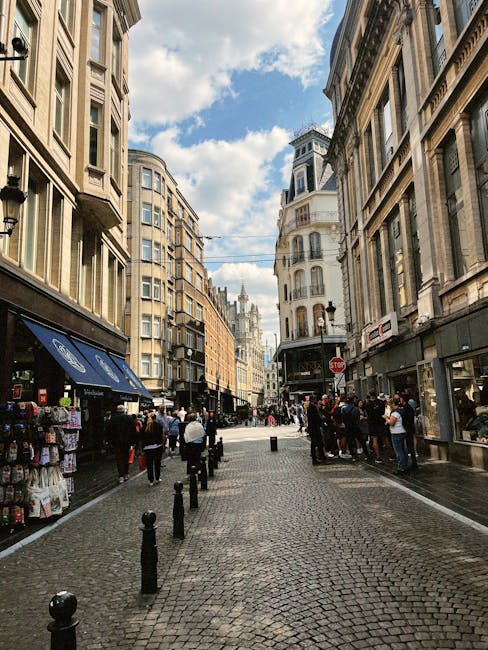
Conclusion: Prepare Your Professional Future in Brussels with a Methodical Approach
Obtaining a work permit in Brussels requires organisation, foresight and a solid understanding of administrative procedures. Between the different permit types (B, C, self-employed), the need for a residence title and the formalities linked to social security and taxation, it’s normal to feel overwhelmed at first. However, by following a structured method — an initial status assessment, preparing a complete and legible file, booking appointments at the right counters, and using local resources like Actiris or municipal services — you substantially reduce the risk of delays.
Brussels also offers many advantages for foreign workers: a dynamic job market in services, tech, NGOs and international institutions, a wide language offering (French, Dutch, English) and a network of associations ready to help newcomers. Always ask for a receipt for each payment, keep both digital and paper copies of all documents, and verify deadlines and fees on official websites to better control the process.
Finally, always negotiate with your future employer for them to cover the administrative procedures and costs related to the work permit — many Brussels companies, aware of the complexity, agree to handle some or all of these formalities. If your situation is complex (regulated profession, posting, humanitarian case), seek assistance from a legal advisor specialized in immigration law in Brussels to avoid costly mistakes.
In short: get informed, anticipate, get organised and use the help available. With its institutions and opportunities, Brussels remains an attractive and accessible destination for international workers who take the time to prepare carefully. Good luck with your procedures and welcome to Brussels!