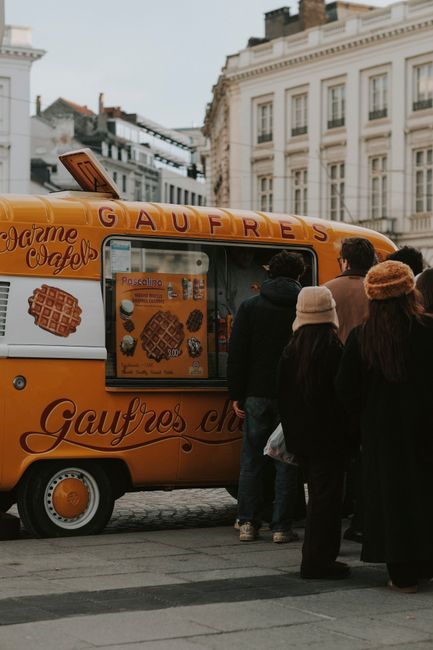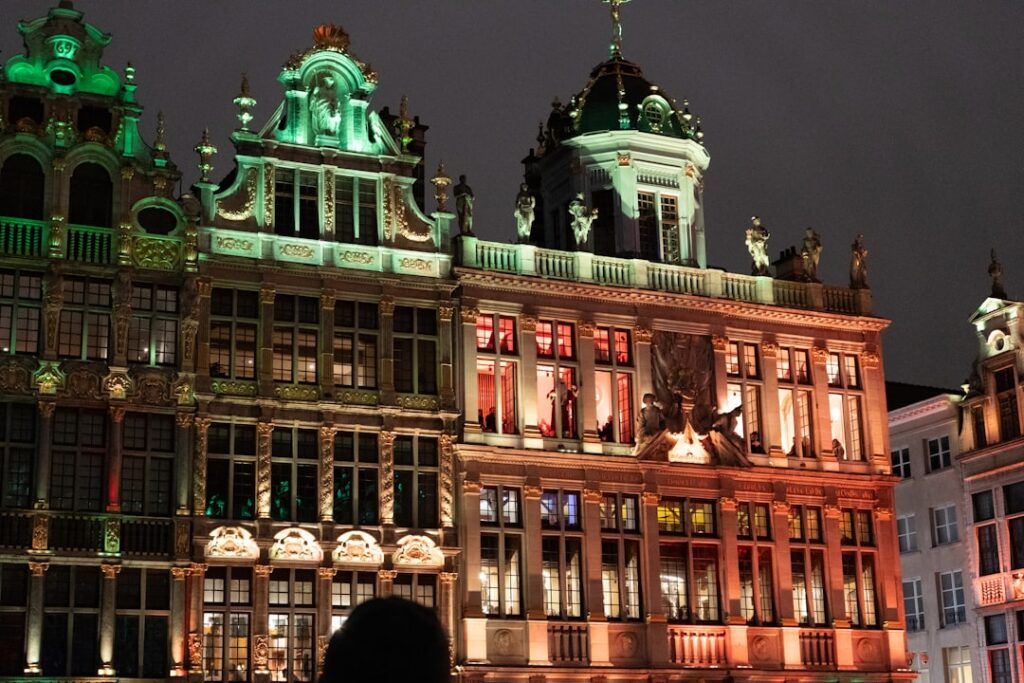





Introduction — Taste Your Way Through Brussels: Top Markets and Budget Friteries You Need to Know
Brussels is a city where street food meets a lively, varied market culture. Whether you’re a curious tourist, a local looking for great spots, or a foodie after authenticity, the capital’s markets and friteries offer a full panorama: fresh produce, local specialties, comforting snacks and reasonable prices. In this guide I take you on a practical, well-structured food walk focused on concrete places—exact addresses, opening times and price ranges in euros—so you can plan your visits without surprises.
Brussels’ markets are more than shopping spots; they’re social hubs where greengrocers, fishmongers, artisans, cheesemongers, caterers and pop-up canteens mix together. You’ll find colorful stalls of seasonal organic vegetables, freshly landed fish, artisanal bread and pastries that smell of yeast. Beside them, the friteries—often called “fritkots”—hold a special place in Brussels’ hearts. A good portion of fries, crispy on the outside and fluffy inside, with a house sauce, can be a full, budget-friendly meal for under €6 at many places.
This guide covers iconic markets—the Midi Market, Jeu de Balle Flea Market, Châtelain Market, Halles Saint-Géry and the Sablon Market—as well as friteries known for their value: Maison Antoine (Place Jourdan), Frit Flagey (Place Eugène Flagey) and Fritland (near the Stock Exchange). For each spot you’ll find the exact address, typical opening hours, indicative prices and immersive descriptions so you know what to buy, when to go and how to get the most out of the experience. I also share local tips on how to order your fries, which sauces to try, bargaining at certain markets and the best times to avoid crowds.
Finally, I assume you want a practical route: easy-to-combine itineraries, alternatives if a place is closed and recommendations for vegetarian and gluten-free options. Vivid images of stalls, cobbled streets and queues outside a friterie will dot the text—I point out visual markers to help you recognize each spot on the ground. Ready to lay out a picnic cloth, grab a cone of fries and discover Brussels at the pace of its markets and fritkots? Follow the guide.
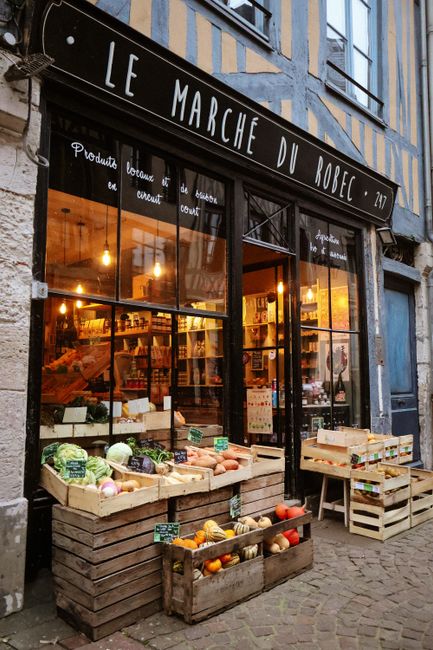
Midi Market — a huge Sunday market and its affordable treasures
The Midi Market is Brussels’ largest market and one of the most popular in Belgium. Set along Avenue du Midi (Avenue du Midi / Zuidlaan) and around Place Bara, it stretches for several hundred meters every Sunday morning and gathers over 300 stalls. Exact address: Midi Market, Avenue du Midi / Place Bara, 1000 Brussels. Typical hours: Sunday from 06:00 to 14:00 (the best products go quickly—arrive before 10:00 for the widest selection).
This market is a goldmine for bargain hunters: seasonal vegetables from €1.50 per kilo for certain varieties, boxes of tomatoes around €3–5, cheeses sold by portion from €3–4 and whole fish priced per kilo (expect €8–15/kg depending on the species). You’ll also find prepared-food stalls: samosas €1.50–2 each, skewers €2–3 apiece and artisanal breads €2–4. The market is multicultural—exotic fruits, spices and halal meats sit alongside traditional Belgian produce.
Practical tips: bring coins (small stalls often don’t take cards for low amounts), a reusable bag and a sturdy basket for your purchases. For a simple breakfast head to the pastry stalls: chouquettes, Liège waffles €2.50–3.50 and takeaway coffees around €1.50–2. For photographers, the morning light is low and rich, making stall colors pop—perfect for capturing the authentic market vibe.
Atmosphere: noisy, lively and very cosmopolitan. Midi Market is also the perfect place to sample cheap snacks between buys. For example, some kiosks sell portions of fries for about €3.50, often paired with house sauces (mayonnaise, ketchup, tartar) charged between €0.40 and €0.80. Families and students appreciate the market for its convenience and affordability.
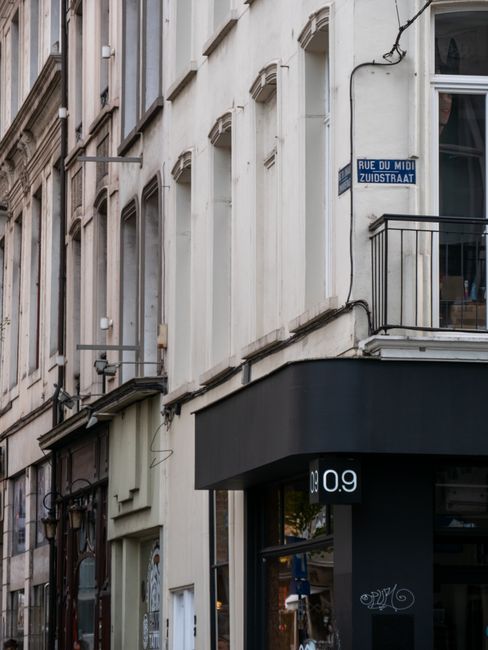
Place du Jeu de Balle — the flea market and its street-food stalls
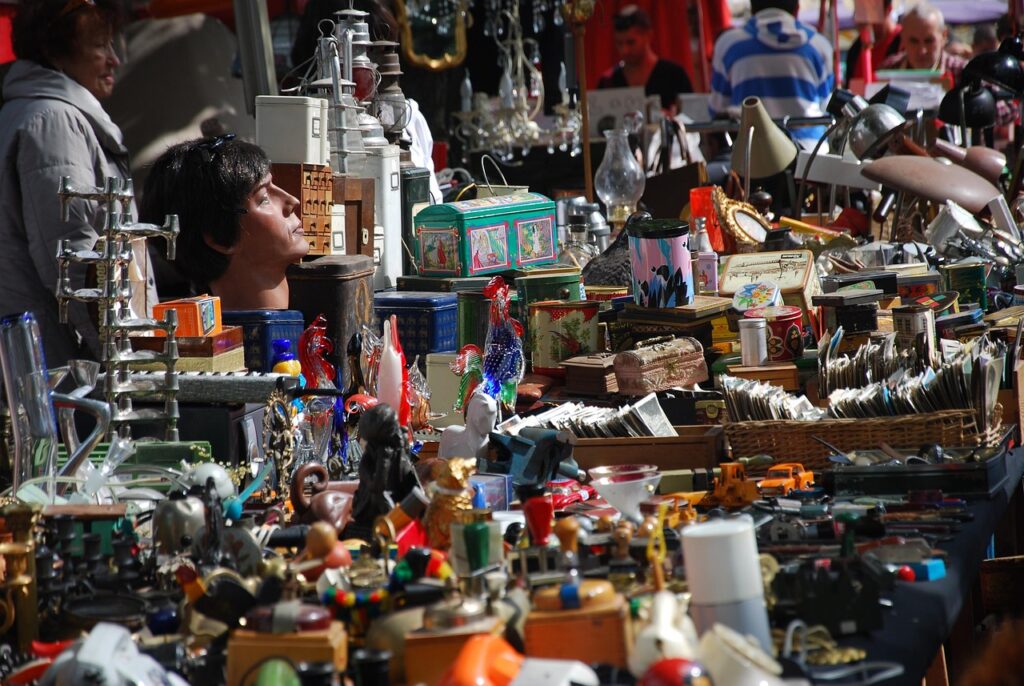
The Jeu de Balle flea market (Vossenplein) is a Brussels institution. Address: Place du Jeu de Balle, 1000 Brussels (in the Marolles neighborhood). Hours: daily from 06:00 to 14:00, but the liveliest activity happens in the morning, especially on weekends. While known for secondhand goods, the square also hosts food stalls and small mobile friteries offering budget-friendly snacks.
Indicative prices: antiques and vintage items from €2–5, clothing €5–20, larger furniture €20–150. On the food side, small portions of fries go for about €3–4, croquettes & bitterballen €1.20–2.50 each, and coffees €1.50–2. Antique lovers can follow up a browse with a quick lunch: the square is full of hot sandwiches, savory tarts and cheese stands.
Immersive description: wander winding aisles where patinated wooden cabinets, old vinyl records and Art Deco chandeliers mingle. Quaint cafés with painted facades serve simple dishes. Street vendors often invite you to eat standing on stone benches while you soak up the urban show—kids playing, buskers performing and booksellers among the reclaimed objects.
Local tips: arrive early to avoid crowds and to haggle over antiques (a 10–20% discount is often possible when you negotiate). For food, pick stalls with queues of locals—that’s a sign of freshness. If you want piping-hot fries, ask for « a frite with house mayonnaise » (expect €3.50–4) and consider adding a special house sauce (€0.50–1).
Place du Châtelain and Halles Saint-Géry — neighborhood markets for foodies
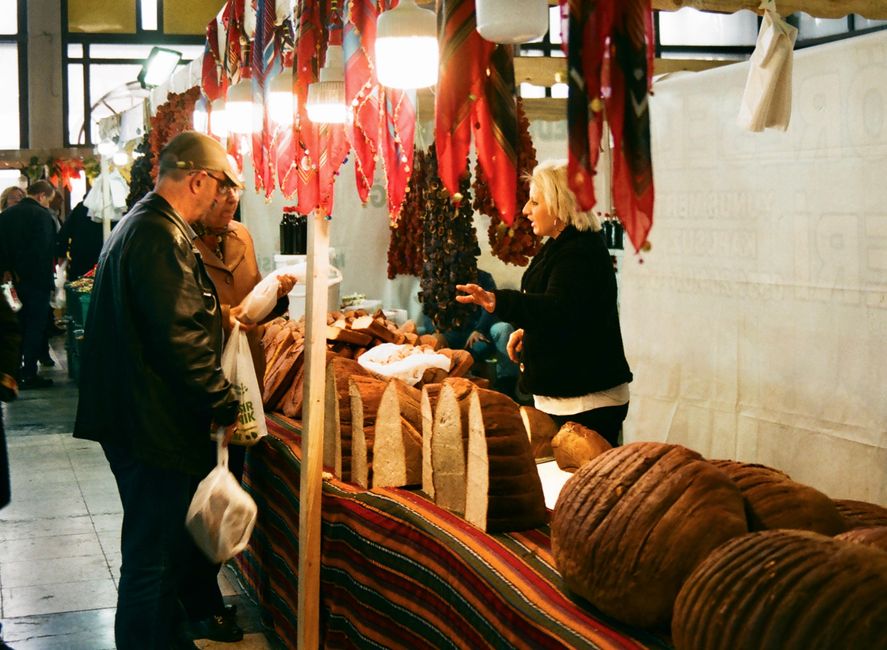
The Châtelain Market, on Place du Châtelain in Ixelles (Place du Châtelain, 1050 Ixelles), is a beloved neighborhood market popular with locals and gourmets. Hours: Wednesday from 12:00 to 18:30 (subject to change; sometimes 11:00–18:00 depending on the season). You’ll find stalls selling organic fruits and vegetables, charcuterie, artisanal cheeses and caterers. Prices: organic vegetable baskets €6–12, cheese portions €3–6, ready-to-go dishes €5–10.
Halles Saint-Géry (Halles Saint-Géry, Rue du Pont de la Carpe 1, 1000 Brussels) is another must-visit for urban food lovers. The venue regularly hosts pop-up markets, weekend brunches and culinary events. Hours vary—check weekly programs—but stalls are often open Saturday and Sunday from 10:00 to 18:00. Prices are slightly higher than a neighborhood market but remain reasonable: street-food plates €6–12, coffees and pastries €2–5.
Immersive description: Place du Châtelain feels like an urban village, with terraces and fine shops surrounding the square. Local producers are commonly present, and quality tends to trump quantity: sourdough loaves €3–5, artisanal preserves €4–8. At Halles Saint-Géry, industrial architecture blends with modern concepts (oyster bars, culinary pop-ups, food trucks). It’s a spot to try innovative products—ceviche, artisanal falafels and contemporary pastries.
Tips: for an affordable celebratory lunch, build a picnic at Châtelain: bread €3 + cheese €4 + charcuterie €4 = €11 for a full picnic. At Halles Saint-Géry, book ahead if you want to attend a specific event (tastings, producer markets). Both places are ideal for discovering local makers and bringing home edible souvenirs.
Must-visit friteries on a budget — where to eat fries in Brussels
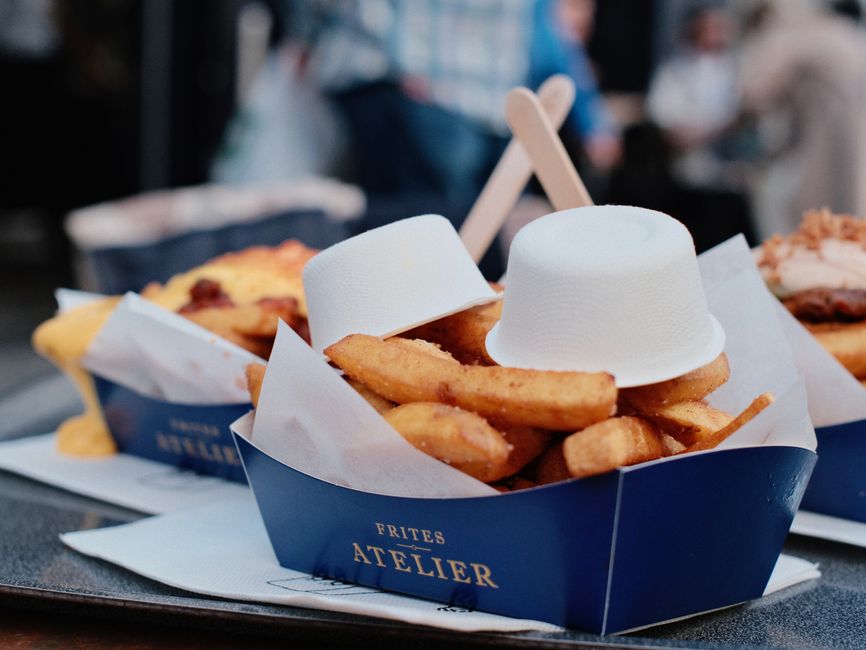
No Brussels food guide would be complete without mentioning the friteries—the “fritkots”—scattered across the city. Here are three emblematic, convenient and affordable spots, with addresses, hours and indicative prices to help you navigate.
-
Maison Antoine
Address: Place Jourdan 1, 1040 Etterbeek, Brussels.
Hours: open every day, usually from 16:00 to 03:00 (late-night hours vary by season).
Prices: a simple portion of fries about €3.50, portion with sauce(s) between €4.00 and €5.50 depending on combinations. Specialties: fresh fries double-fried, house sauces (andalouse, samurai, tartar).
Description: Maison Antoine is famous for its consistency and nighttime popularity—expect a queue in the evenings. The smell of frying, the sizzling of fries browning in fat and the hint of onion in the air make a scene that’s typically Brussels. -
Frit Flagey
Address: Place Eugène Flagey, 1050 Ixelles, Brussels.
Hours: often open 11:00–22:00 (hours vary by vendor and season).
Prices: classic portion €2.80–3.50, large portion €4–5, sauces €0.50–1.
Description: Located near the Ixelles pond, Frit Flagey draws walkers and students. It’s a perfect pit stop after a stroll around the Flagey area or after visiting a local market. -
Fritland (near the Stock Exchange)
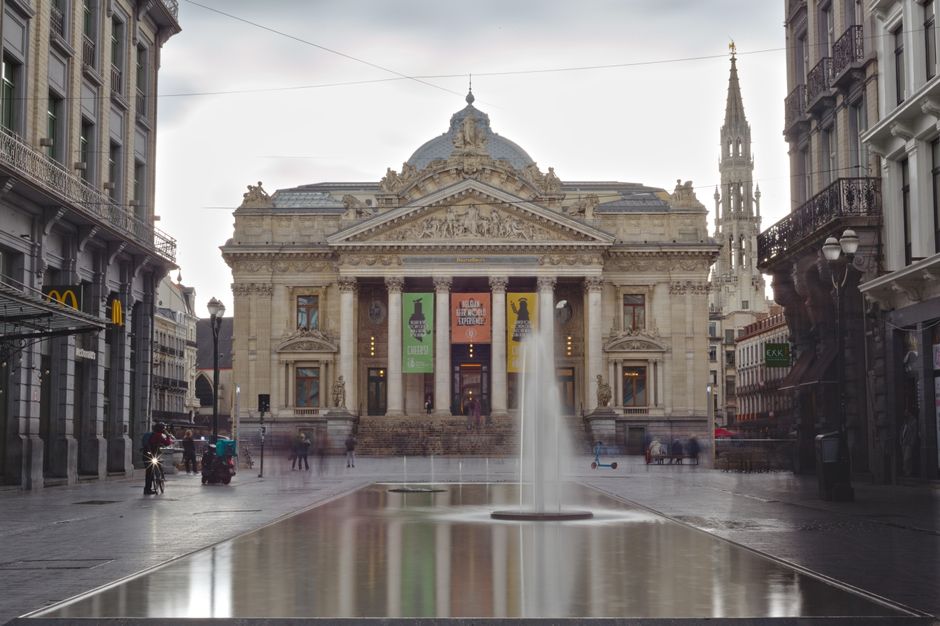
Address: Rue Henri Maus 24 (near the Stock Exchange / Grand-Place), 1000 Brussels.
Hours: open every day, usually 11:00–03:00 (popular late-night hours).
Prices: classic portion €3–4, combos with sandwiches €5–7.
Description: Fritland is very busy with tourists and night-shift workers. You’ll find a long list of sauces and snacks (cheese croquettes, simple burgers).
Local tips for ordering fries: ask for « a frite, please » or « a portion of fries with house mayonnaise. » Brussels locals love their fries crispy and often eat them standing, dunking them generously into sauce. Classic sauces include Belgian mayonnaise (creamy), andalouse (tomato and paprika), samurai (spicy) and tartar. For a budget-friendly option, choose the simple portion and share if you’re visiting as a pair.
Sablon Market and tips for refined purchases and edible souvenirs
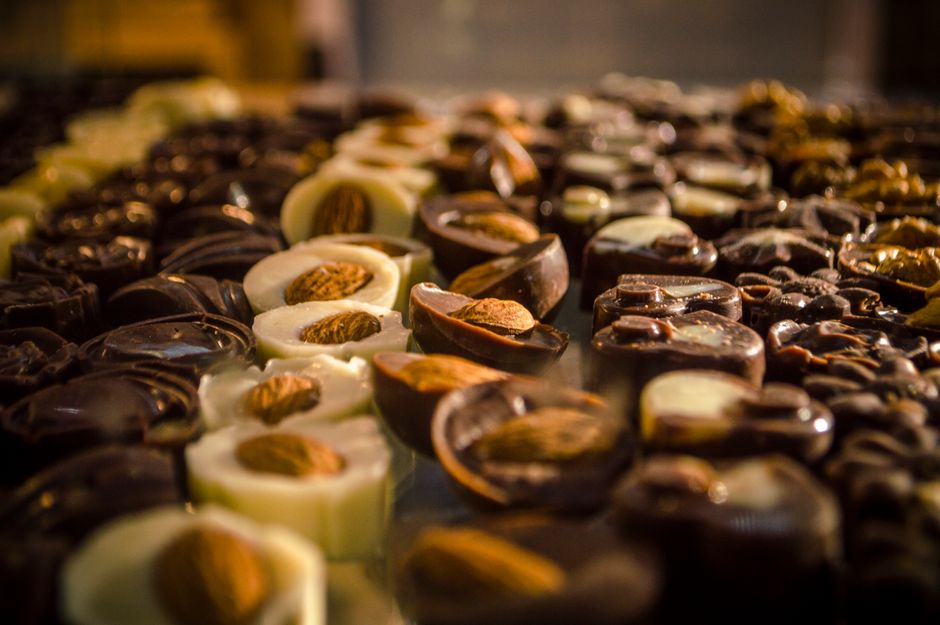
The Sablon neighborhood is famous for its chocolatiers and antique market, but on Sundays you’ll also find carefully curated food stalls. Address: Place du Grand Sablon, 1000 Brussels. Hours: antiques and food stalls on Friday, Saturday and Sunday, generally from 10:00 to 18:00. Here visitors will find artisan chocolates, fine biscuits, specialty teas, locally roasted coffees and premium preserves.
Prices: a box of artisan pralines €6–20 depending on size, a bar of artisan chocolate €3–8, a bag of biscuits or shortbreads €4–7. Cheesemongers offer tasting boards €6–12 for sharing. If you’re after high-quality edible souvenirs, the Sablon is the place to go—a balance of quality and fair pricing for artisanal products.
Immersive description: the Sablon is elegant: cobbles, classical facades and chocolatier windows. You can assemble a refined hamper for a picnic in a nearby park or as a gift. Vendors are often the producers themselves, ready to explain where ingredients come from and how products are made—a great chance to learn and choose with confidence.
Practical tips: if you want to taste several chocolates, ask for a small tasting (often free). To bring pralines home, pick packaging that protects from heat, especially in summer. Finally, combine a Sablon visit with a stop at a nearby friterie if you want to contrast luxury and simplicity in a single day.
Conclusion — Planning your Brussels food walk: routes and final tips
To wrap up, Brussels offers an astonishing variety of markets and friteries for every budget and craving. In one day you can realistically combine a morning at Midi Market (start around 08:00 to catch the best stalls), a mid-morning stop at the Jeu de Balle market to browse and snack, then a lunch at Châtelain or Halles Saint-Géry. In the evening finish with a portion of fries at Maison Antoine or Fritland: the experience is convivial, affordable and deeply rooted in local culture.
A few practical tips to optimize your route: bring cash for small purchases, favor morning visits for freshness and haggling, and carry an insulated bag if you buy cheese or fish. For vegetarians and people with dietary restrictions, many markets now offer plant-based options (falafels, grilled vegetable dishes, vegan cheeses). Don’t hesitate to ask vendors about product origins and storage advice.
Finally, adopt the local mindset: eat standing at a friterie counter, exchange a few words with a producer at the market, stroll without a strict agenda. Brussels is best discovered at the pace of its stalls and fritkots—it’s a culinary journey that celebrates conviviality. Happy foodie walks, and remember: the best fry is often the one shared on a corner of a square, between laughter and improvised conversation.