





Introduction: Why Understanding the Brussels Visa Matters
Brussels, Belgium’s capital and the political heart of the European Union, draws millions of visitors every year — tourists, students, businesspeople, researchers and temporary workers. Getting a handle on the visa framework that applies to Brussels is essential whether you’re planning a short sightseeing trip, a study period, a work assignment or a longer move. Visa rules combine Schengen short‑stay provisions and Belgian national procedures for long stays, which can seem confusing at first glance.
This article is a practical, step‑by‑step guide in 10 essential points to help you untangle procedures, costs, where to apply, typical timelines and useful local tips. You’ll find concrete information: the types of visas for Brussels, which documents to prepare, where to submit your application, how much it typically costs in euros, opening hours of application centers, plus on‑the‑ground advice for your first week in the city — where to get a regularization appointment, where to make certified copies or get documents officially translated, and how to handle local transport.
We also include practical tips to speed up processing (booking appointments, preparing proof of finances and accommodation, getting travel insurance that meets Schengen requirements), along with alternatives if you’re applying from a third country (using VFS Global, TLScontact, or Belgian consulates). This guide takes an immersive approach: you’ll find exact locations in Brussels (addresses, indicative prices, opening hours) and local advice for settling in — for example where to get a regularization appointment or certified translations.
Important: consular rules and fees can change; always double‑check official sources (Federal Public Service Foreign Affairs or the website of the Belgian embassy/consulate in your country). The addresses and hours listed here reflect common practices and are intended as practical orientation before you confirm details with the competent authorities.
1. Types of Visas for Brussels: Short‑stay (Schengen) vs Long‑stay (National)
The first distinction to know is between the Schengen short‑stay visa (Type C) and the Belgian national long‑stay visa (Type D). A Schengen visa allows stays of up to 90 days within a 180‑day period for tourism, family visits or business. The national visa (Type D) is required for stays longer than 90 days: studies, salaried work, family reunification, research or residence. Brussels applies these rules the same way as the rest of Belgium.
Indicative fees: a Schengen visa (Type C) typically carries a consular fee of around 80 EUR for adults (standard rate, subject to change). Children aged 6–12 usually pay about 40 EUR; under 6s are often exempt. National visas (Type D) vary by category (students, work, family reunification): administrative fees can range from roughly 160 EUR to 250 EUR, but amounts differ. Exemptions or reduced fees may apply depending on your status (researcher, family member of an EU citizen, etc.). Always check the fees published by the embassy/consulate or visa center.
Processing times: for a Schengen visa, the average processing time is around 15 calendar days after a complete application, though it can be extended up to 30 or even 60 days depending on complexity. National visas can take weeks to several months (for example, for a work permit or family reunification). These are indicative timelines; where possible, plan to apply at least 2–3 months before your intended travel date.
2. Where to Submit Your Application: Embassies, Consulates and Application Centers (VFS, TLScontact)
You usually submit your application at the Belgian diplomatic representation in your country of residence: the Belgian embassy or consulate. In many countries, submission is outsourced to providers like VFS Global or TLScontact; these centers collect applications, take biometric data and forward files to the consulate. If you’re already in Brussels and need to regularize your stay, extend a permit, or file for family reunification, you’ll mainly deal with the Federal Public Service Interior – Office des Étrangers and your local commune for registration.
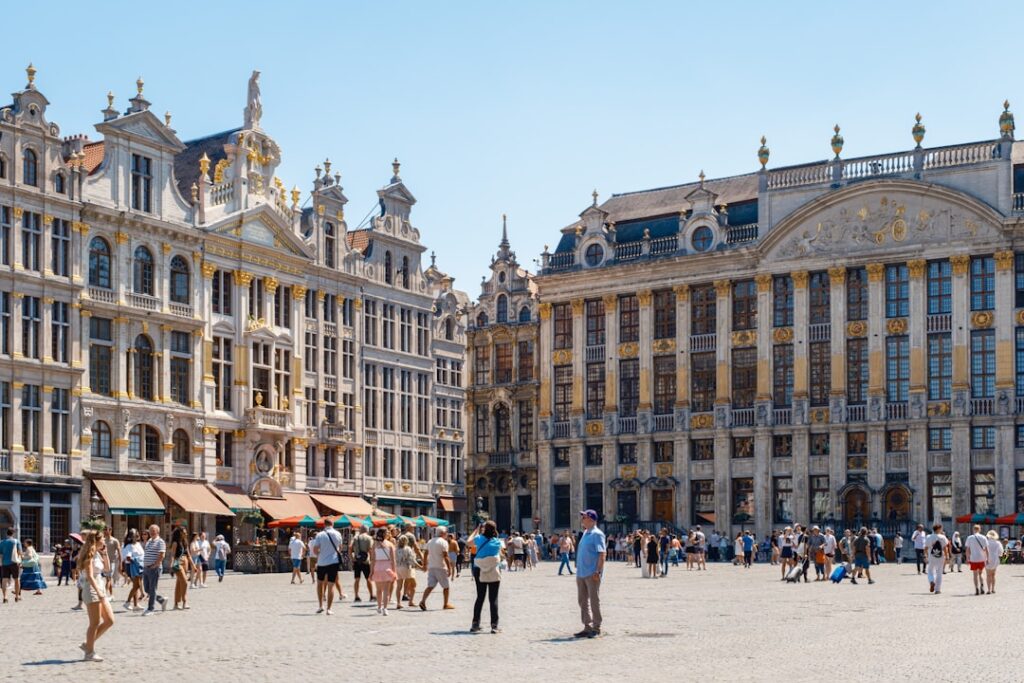
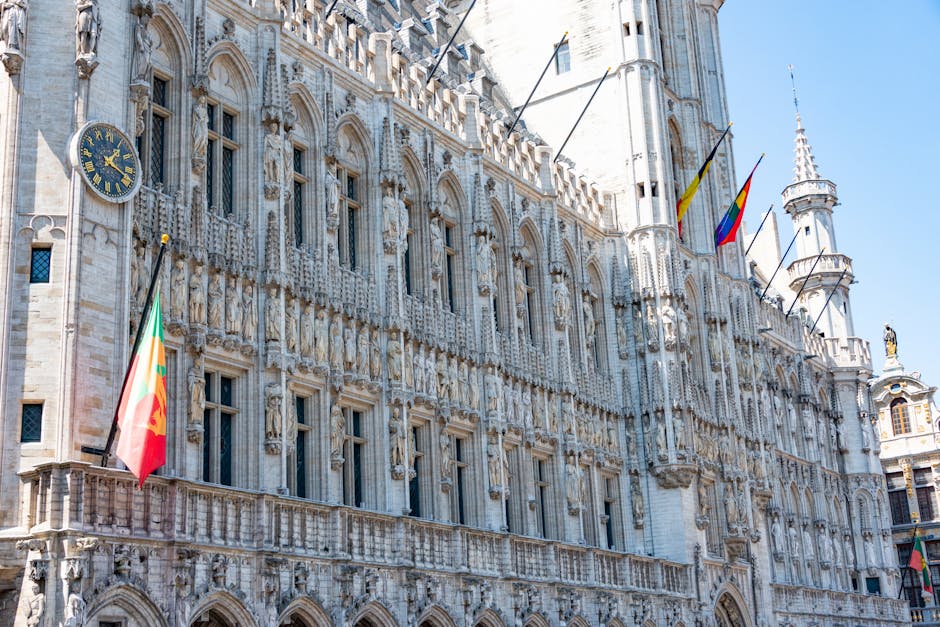
Useful address in Brussels: Office des Étrangers – Rue du Progrès 80, 1035 Schaerbeek, Belgium. Usual opening hours: by appointment, Monday to Friday, 09:00–12:00 (hours may vary; it’s essential to book online via the FPS Interior website). For municipal formalities (registration at the local town hall), go to the City of Brussels Town Hall — Grand‑Place 1, 1000 Brussels — opening hours: Mon–Fri 09:00–16:00.
Tip: book your appointments well in advance and keep confirmation emails. In emergencies (medical or professional reasons), some consulates provide priority slots with justification. VFS/TLS centers charge an additional service fee (e.g. 20–30 EUR) on top of the visa fee.
3. Detailed Document Checklist for a Schengen Visa to Brussels
A complete file is the key to a quick and positive decision. For a Schengen visa (tourism/business), the commonly required documents are:
- Completed and signed application form (the uniform Schengen application form available on the embassy or visa center website).
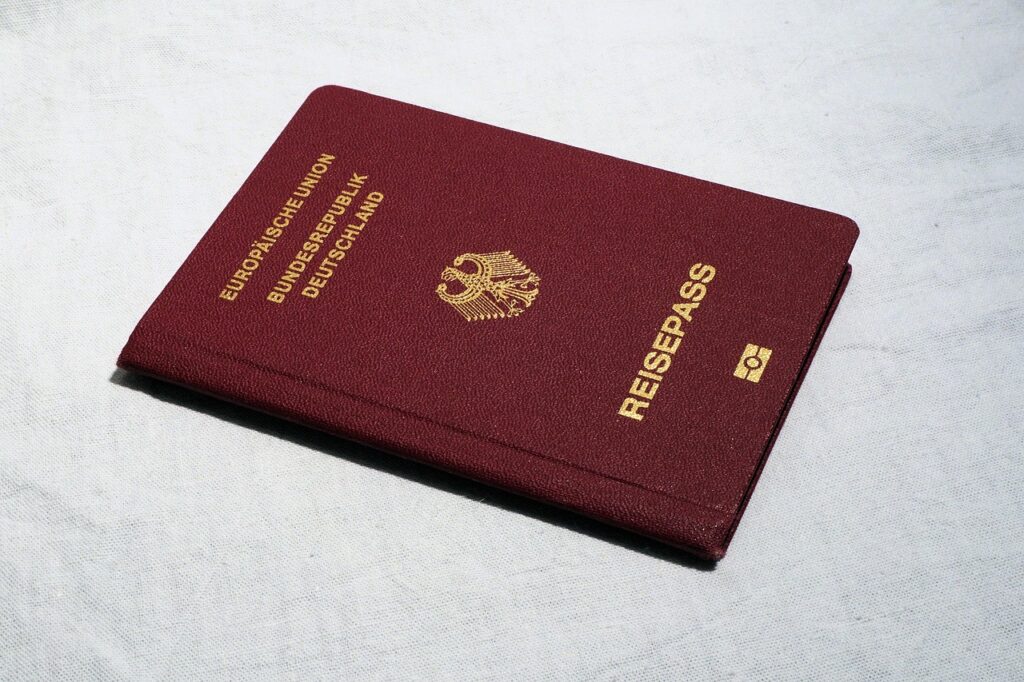
- Original passport valid at least 3 months beyond the planned exit date from the Schengen area, with at least two blank pages; photocopy of identity pages and previous visas.
- Recent photographs: 2 passport photos meeting Schengen standards (35 x 45 mm, light background).
- Travel insurance covering at least 30,000 EUR for medical emergencies and repatriation, valid for the entire stay in Belgium and the Schengen area.
- Proof of financial means: bank statements for the last 3 months, payslips, employer letter.
- Proof of accommodation: hotel reservation (e.g., Hotel Amigo, Rue de l’Amigo 1, 1000 Brussels) or an invitation letter from a Belgian host with a copy of their ID/passport and proof of address.
- Return tickets or travel reservations (train, flight) and a detailed itinerary.
- Proof of ties to your home country: employment contract, study certificate, property deeds, family documents.
Approximate price of passport photos in Brussels: photo studios such as « Photo Service Bruxelles » (Chaussée d’Ixelles 100, 1050 Ixelles) offer compliant ID photos for about 10–15 EUR. Validity: bring originals and copies; incomplete files are the most common reason for refusals.
4. Specifics of the National Visa (Type D) for Study and Work in Brussels
For stays longer than 90 days, the procedure is more involved: the national visa (Type D) is the gateway to a Belgian residence permit. Students must provide an enrollment certificate from a recognized university: for example Université libre de Bruxelles (ULB) — Avenue Franklin Roosevelt 50, 1050 Ixelles — or Vrije Universiteit Brussel (VUB) — Pleinlaan 2, 1050 Ixelles. Tuition fees vary by status (EU/non‑EU): non‑EU fees can range from about 600 EUR to several thousand euros per year depending on the program.
For employment, the Belgian employer often needs to obtain a work permit (if applicable) and supply a contract, proof of salary in line with Belgian scales and social security registration. Minimum salaries vary by sector; for a typical qualified position in Brussels in 2026, gross monthly minimums might be in the 2,300–3,000 EUR range, but this depends on collective agreements and the sector.
Timing and registration: after receiving the national visa abroad, on arrival you must register at the commune where you live in Brussels (for example: Ixelles Commune, Place Eugène Flagey 18, 1050 Ixelles — opening hours Mon–Fri 09:00–16:00) to request your electronic foreigner card (residence permit). The residence card carries an administrative fee that varies (about 30–100 EUR depending on type and duration).
5. Biometric Procedure and Fingerprinting for Brussels
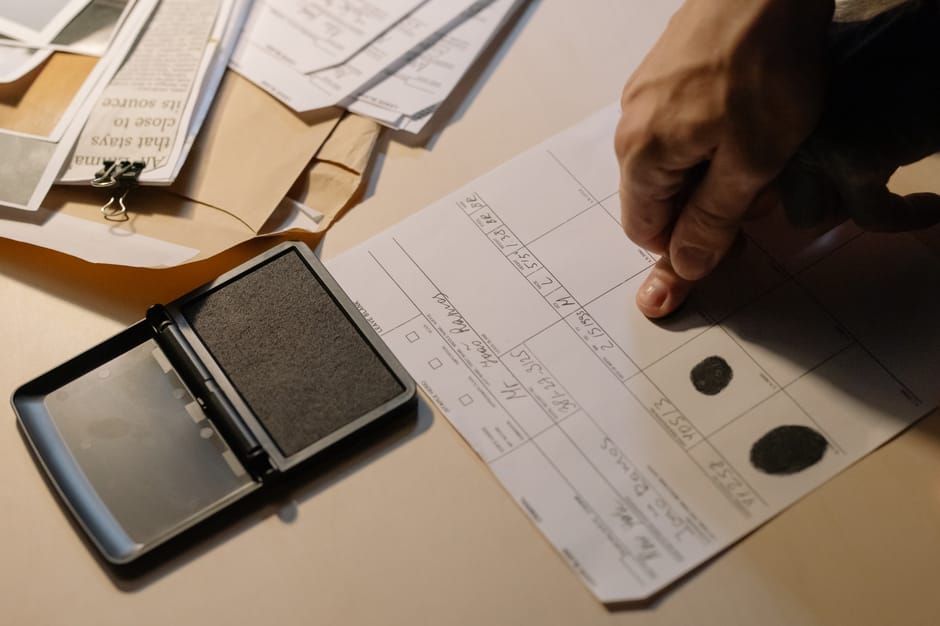
Since biometric systems were introduced, most visa applications require biometric data (fingerprints and a photograph). These data are collected when you submit your application at the visa center (VFS/TLS) or at the embassy. Your fingerprints remain valid for 59 months for future Schengen applications, so you won’t need to repeat them if you apply again within that timeframe.
Hours and duration: biometric capture is typically part of the appointment (total visit time: 20–40 minutes depending on queues). VFS and TLS centers usually operate Monday to Friday in early business hours (08:00–16:00), although some large cities offer extended hours. Additional fees: providers commonly charge a non‑refundable service fee (around 20–30 EUR).
Local tip in Brussels: if you need to issue or collect an official document once your visa is granted (proof of residency, ID card), allow extra time for visits to the commune or the Office des Étrangers — appointments and queues can fill up weeks in advance.
6. Fees, Payments and Common Exemptions
Visa fees combine the consular fee and often a service charge from the outsourced center. Typical rates (indicative):
- Schengen visa (adults): 80 EUR
- Children 6–12 years: 40 EUR
- Children under 6: free
- Service fee (VFS/TLS): 20–35 EUR
- National visa (Type D): variable, often 160–250 EUR depending on the category
Exemptions: certain applicants are exempt or pay reduced fees — family members of EU citizens, researchers, students on exchange programs, and those receiving humanitarian aid. Application fees are generally non‑refundable in case of refusal.
Payment methods: embassies often accept cash, card or bank transfer. Submission centers have their own rules — check their websites to see whether they accept foreign cards, cash or online payments.

7. Practical Tips to Speed Up Your Application
Plan and organize your file like a pro: list every required document, have certified copies where needed, and prepare extra supporting documents (proof of financial reserves, medical certificates). Here are concrete tips:
- Scan and archive all documents as PDFs. Bring a USB stick and paper copies to your appointment.
- Have key documents translated and, if necessary, officially certified (sworn translations): birth certificates, marriage certificates, diplomas. In Brussels, sworn translators are listed via municipal services; a certified translation usually costs 50–150 EUR per document depending on length.
- Provide tangible proof of accommodation and planned activities in Brussels (hotel bookings, invitation letters, meeting schedules, tickets for events at BOZAR — Rue Ravenstein 23, 1000 Brussels).
- If refused, know that you have the right to appeal; the refusal letter explains the available remedies and deadlines.
8. On Arrival in Brussels: Registration, Residence Card and Post‑Visa Steps
Once you arrive in Brussels with a national visa, register promptly at your commune of residence. Example: Saint‑Gilles Commune, Avenue Molière 96, 1060 Saint‑Gilles — town hall hours: Mon–Fri 09:00–13:00 and 14:00–16:00 (check locally). You’ll receive proof of registration and can apply for your electronic foreigner card (card A, B or other depending on the reason for stay).
Requirements: enroll in social security, open a Belgian bank account (e.g., CBC Bank, Rue du Marché aux Herbes 10, 1000 Brussels), and join a health insurance fund (mutuelle) to access healthcare reimbursements. Banks typically require ID, proof of address (rental contract or domiciliation certificate) and sometimes proof of income.
Useful health address: Hôpital Saint‑Pierre, Rue Haute 322, 1000 Brussels — 24/7 emergency department; for non‑urgent care, make an appointment with a local GP. Always keep copies of your administrative documents and cards.
9. Special Cases: Diplomats, Researchers, and Family Members of EU Citizens
Certain categories benefit from simplified procedures or fee exemptions. Family members of EU citizens generally receive priority treatment and may be fee‑exempt — you’ll need to provide proof of relationship (birth certificate or marriage certificate) and evidence of the EU family member’s status. Researchers and experts on Erasmus or Horizon Europe projects may receive special status with partial fee coverage and expedited processing.
Diplomats and officials of EU institutions (such as the European Parliament — Rue Wiertz 60, 1047 Brussels) have dedicated procedures handled via their administrative services. For humanitarian or medical urgent cases, emergency procedures exist: these require official medical certificates and direct contact with the consular representation.

10. What to Do If You’re Refused or Face Problems: Appeals and Local Solutions in Brussels
If your application is refused, the refusal letter must state the reasons and explain how to appeal. You can challenge the decision administratively or judicially depending on the indicated jurisdiction (an amicable appeal to the consulate, or legal action before Belgian courts if the decision was taken by a Belgian authority). Deadlines to bring a case are strict — usually 30 days from notification — so check the refusal letter carefully.
Local help in Brussels: for assistance, contact immigration lawyers in Brussels (for example Immigration Lawyers Brussels, Rue du Bailli 50, 1050 Ixelles — fees vary, commonly 100–250 EUR/hour). Migrant support associations also offer initial guidance free or at low cost: examples in Brussels include Vluchtelingenwerk Vlaanderen and BRAN (Brussels Accueil). Municipal town halls often provide accompaniment services for administrative procedures.

Conclusion: Prepare Your Brussels Visa Carefully and Smartly
Getting a visa for Brussels takes careful preparation, advance planning and thorough document organization. Whether it’s a Schengen short‑stay visa or a national Type D visa, your purpose — tourism, business, study, work, or family reunification — will determine the documents, timing and cost. Embassies, consulates and submission centers (VFS Global, TLScontact) are your first contact points: book appointments weeks or months ahead and keep records of all steps (appointment confirmations, payment receipts, copies of submitted documents).
On arrival in Brussels, know where to register (your commune, the Office des Étrangers), how to open a bank account, sign up for health coverage and complete residence formalities. Anticipate extra costs: sworn translations (50–150 EUR), passport photos (10–15 EUR), center service fees (20–35 EUR), and possible lawyer fees in case of appeal. For urgent or special cases (diplomatic procedures, researcher status, EU family members), check the specific fast‑track options and fee exemptions.
Remember: official sources prevail — always consult the Federal Public Service Foreign Affairs website and the Belgian embassy website in your country for up‑to‑date forms, fees and appointment procedures. If you need personalized help assembling your file (checklist, translation, appointment booking), professionals and local associations in Brussels can assist. Good preparation and enjoy your stay in Brussels — a city where history, politics and cultural life meet every day.