





Introduction — Why choose between the metro, bike or e‑scooter in Brussels?
Brussels is a multicultural capital where daily mobility comes in many forms: underground metro, historic trams, shared bikes or dockless electric scooters. Picking the right way to get around isn’t just about speed — it’s also a trade‑off between cost, comfort, environmental impact, accessibility and the kind of urban experience you want. In this complete guide I give you practical, up‑to‑date info on fares, schedules, key locations and local tips so you can navigate the Belgian capital with confidence.
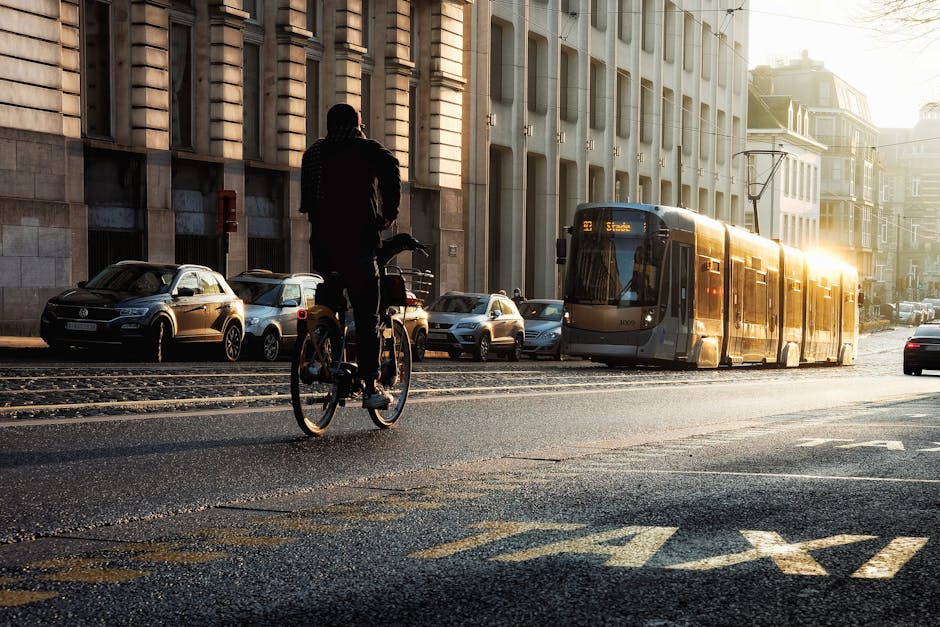
The public network run by the Brussels Intercommunal Transport Company (STIB/MIVB) covers much of the Brussels-Capital Region with 4 metro lines, 17 tram lines and an extensive bus network. The metro connects major hubs like the European Quarter (Schuman), Brussels-Midi/Brussel-Zuid station and the city’s north (Gare du Nord/Brussel-Noord), making it the backbone of daily travel. By contrast, bikes and scooters give a more immersive experience: winding through the alleys of the Sablon, cruising along the central boulevards, or reaching neighborhoods less served by the underground network.
Beyond theory, each mode has practical specifics. STIB tickets are sold at station machines and via the official app: a single ticket usually costs around €2.50 and a day ticket is often available for about €7.50 (check current prices before you travel). Villo!, the city’s bike‑share system, offers daily, weekly and annual plans for tourists and residents — for example, 24‑hour or 7‑day passes typically include the first 30 minutes free per trip, with scaled fees after that. Dockless electric scooter companies (Dott, Lime, Tier, etc.) generally charge a ~€1 unlock fee plus a per‑minute rate of about €0.20–€0.30.
This guide will help you weigh pros and cons based on your profile: a rushed traveler, curious sightseer, family with kids, or a budget‑conscious local. You’ll find exact addresses (stations, rental points, attractions), typical schedules, price indications in euros, and essential local tips: where to lock a bike, how to avoid regulated pedestrian zones, which metro lines to favor at peak times, and how to use a scooter safely on Brussels’ cycle lanes. By the end you’ll know not only what to choose, but how to make each trip faster and more enjoyable.
Brussels metro: speed, network and practical tips
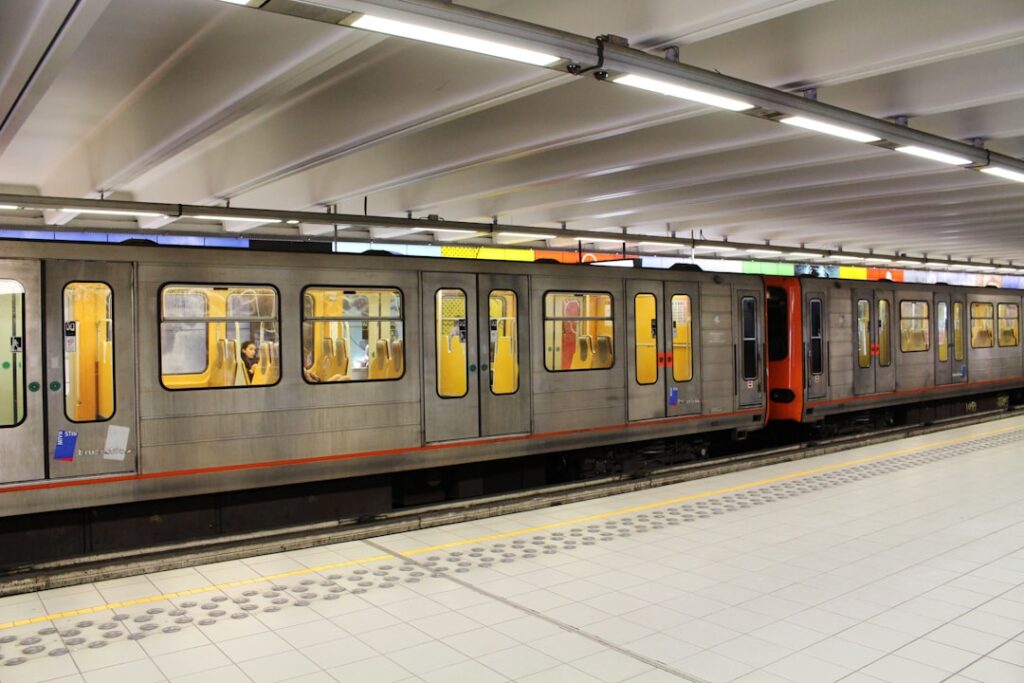
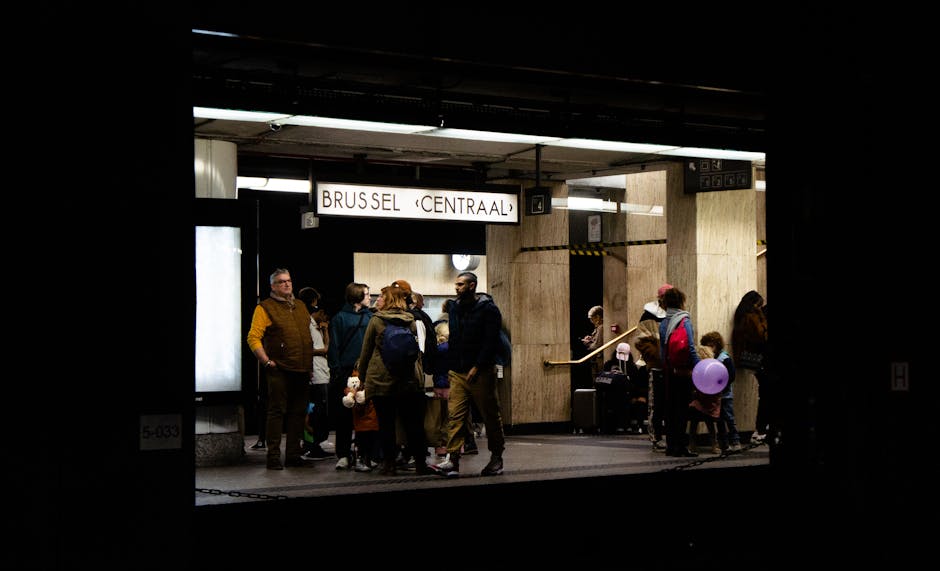
Brussels’ metro, run by STIB/MIVB, is the most reliable way to cross the city quickly and avoid surface traffic. The four metro lines (Lines 1, 2, 5 and 6) serve key nodes: Brussels-Midi / Brussel-Zuid (Place de la Gare 1, 1060 Brussels), Brussels-Central / Brussel-Centraal (Place de la Gare, 1000 Brussels), Gare du Nord / Brussel-Noord (Gare du Nordplein, 1030 Schaerbeek), and administrative areas like Schuman (Rue de la Loi/Wetstraat, 1000 Brussels). Connections with trams and buses make it easy to reach more local destinations.
Hours: generally the metro runs from around 5:30 a.m. to about 12:30 a.m. Monday to Thursday, with extended service on Fridays and Saturdays (some lines until 2:00 a.m.). Trains are very frequent during peak hours (every 2–5 minutes on central sections) and run every 6–10 minutes off‑peak. Times may change for holidays or engineering works; check the official STIB site (https://www.stib-mivb.be) for updates.
Fares and tickets: a single ticket (valid for 60–75 minutes for multimodal STIB travel) generally costs €2.50. A day pass is usually around €7.50 and allows unlimited trips over 24 hours. Reloadable MOBIB cards and monthly/annual subscriptions offer big savings for residents. Young people and seniors may benefit from reduced fares — check STIB’s fares page for details. Tickets can be bought at station machines (card and cash accepted), at authorized sales points or via the STIB mobile app.
Must‑know stations: Brussels-Midi (Place de la Gare 1, 1060 Brussels) is the hub for international trains (Thalys, Eurostar, IC); expect 10–20 minutes to reach the center depending on connections. Brussels-Central (Place de la Gare, 1000 Brussels) puts you right in the tourist heart (Grand-Place). Schuman (Rue de la Loi/Wetstraat, 1040 Brussels) is ideal for European institutions (Parc Léopold, Rue Belliard 99-101). For shopping and nightlife, get off at De Brouckère (Rue de l’Évêque 1, 1000 Brussels) or Anneessens (Rue du Vieux Marché aux Grains, 1000).
Local tips: avoid the 2/6 loop near major stations at rush hour (8:00–9:30 and 17:00–19:00) if you can — trains fill up fast. If you’re carrying luggage, aim for the central cars where there’s more space. Keep your ticket until you exit — inspections are common. On market days (for example the Jeu de Balle flea market at 1000 Brussels) combining metro + bike (nearest Villo! station: Villo! station at Place du Jeu de Balle, 1000 Brussels) can be a flexible way to dodge crowds.
Biking in Brussels: Villo!, routes and secure parking
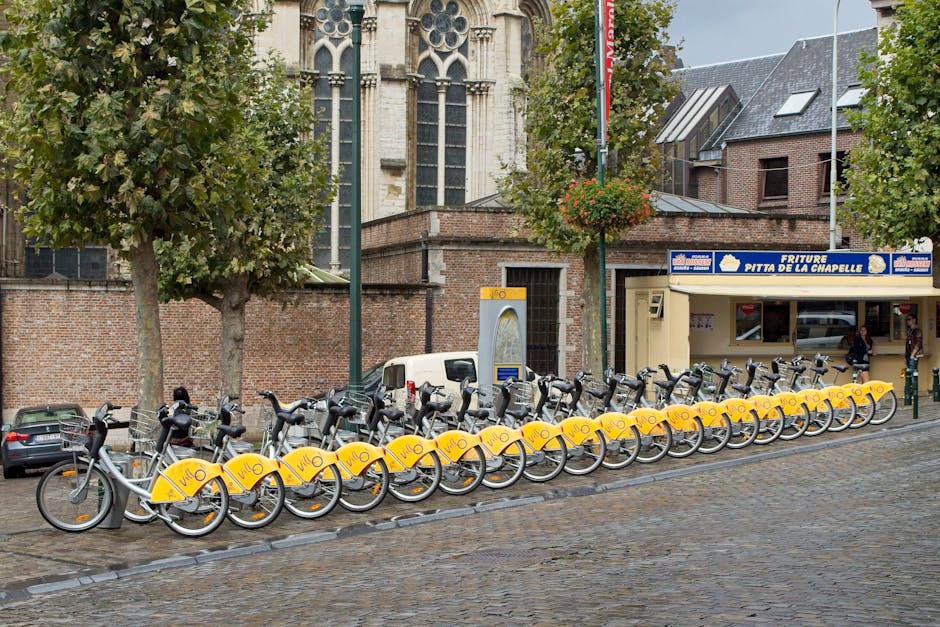
Cycling is one of the best ways to explore Brussels at a relaxed pace while covering decent distances. The main public bike service is Villo!, run by the Brussels region. Villo! offers several plans: 24‑hour tickets, weekly and annual subscriptions. As a guide, a 24‑hour plan can cost about €5–7 (allowing unlimited 30‑minute rides, then around €1 for each extra 30 minutes) and annual subscriptions often fall in the €29–39 range (rates subject to change). Stations are plentiful: Villo! station at Place Royale, 1000 Brussels; Villo! station at Brussels-Central, 1000 Brussels; Villo! station at Parc du Cinquantenaire, 1000 Brussels.
Hours and availability: Villo! runs 24/7, but bike availability varies by time and station. Early morning and evening may have fewer bikes near office districts (Schuman, Louise). Use the Villo! app or website (https://www.villo.be) to find stations and see real‑time numbers of available bikes and free docks.
Recommended routes: for a cultural ride, start at Brussels-Central (Place de la Gare, 1000 Brussels), follow Rue Dansaert to Place Sainte-Catherine (Place Sainte-Catherine, 1000 Brussels), then head up to the Sablon (Place du Grand Sablon, 1000 Brussels). For green spaces, cycle through Parc de Bruxelles (Parc Royal, 1000 Brussels) and along the Cinquantenaire (Parc du Cinquantenaire, 1000 Brussels). Existing bike lanes also link Ixelles, Etterbeek and Schaerbeek.
Security and parking: Brussels provides bike hoops in most squares and outside stations and public buildings. Use a U‑lock for longer stops. Traffic rules: obey traffic lights, use bike lanes where present and avoid sidewalks (you can be fined). In pedestrianized central spots (around the Grand-Place, Rue des Bouchers), walk your bike if space is tight. For long‑term parking, supervised bike parking exists at places like Stationnement Vélo Gare du Midi (Place de la Gare 1, 1060 Brussels); check the station’s website for rates and availability.
Practical tips: if you plan multiple stops for museums and cafés, the bike’s flexibility is unbeatable. Bring a lock and a waterproof bag to protect your belongings, especially during showers. For longer rentals or higher‑end bikes (e‑bikes), visit local shops like Cyclomania (Rue du Page 21, 1050 Ixelles) or Rent & Ride Brussels (Avenue Louise 200, 1050 Brussels) — prices vary, typically €15–40 per day for an e‑bike.
Dockless electric scooters: how to use them safely and economically
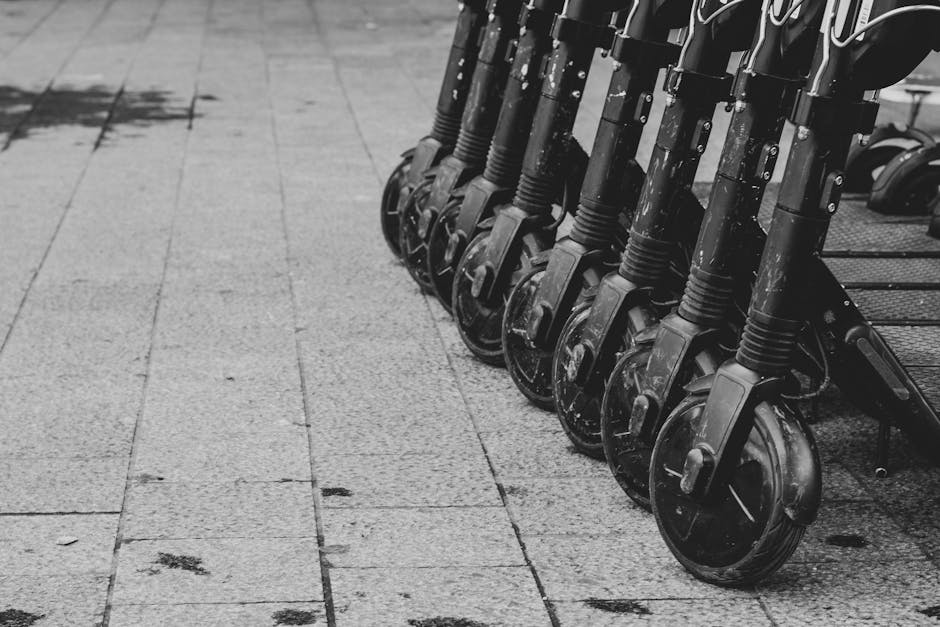
In recent years electric scooters have reshaped urban mobility in Brussels. Several operators are active: Dott, Lime, Tier and sometimes local providers. The business model is straightforward: an unlock fee (around €1) plus a per‑minute rate (typically €0.20–€0.30/min). Typical pricing examples: Dott — €1 unlock + €0.23/min; Lime — €1 + €0.25/min; Tier — €1 + €0.19/min. Occasional promos and flat fares for longer rides may appear in the apps.
Rules and safety: scooters must use bike lanes or the roadway (not sidewalks where pedestrians have priority). Helmets aren’t mandatory for adults but are strongly recommended. Top speeds are capped by operators (usually 20–25 km/h) and geofenced slow zones are enforced automatically near pedestrian areas and some parks. Rules about alcohol and riding in busy pedestrian zones are strict — fines can apply.
Parking zones: to avoid fines and help logistics, park scooters near bike racks, on clear curb edges or in spots designated by the app. Don’t block doorways, ramps for people with reduced mobility, or dense pedestrian areas like the Grand-Place (Grand-Place / Grote Markt, 1000 Brussels) — these spots are often no‑ride or no‑park zones.
Money‑saving tips: for short trips (5–10 minutes), scooters are often cheaper than a taxi and sometimes cheaper than trams. For longer rides, compare the unlock + minute cost with a Villo! trip (if you can keep each journey under 30 minutes). If you plan several back‑and‑forth trips in a day, check the apps for credit packs or subscription bundles (monthly minute packages, discounted ride packs).
Charging and sustainability: some scooters are recharged by overnight maintenance teams. If you find a defective scooter (brakes, low battery), report it in the app to prevent accidents. Remember that sharing public space with pedestrians and cyclists requires courtesy: ring your bell before overtaking, slow down in tight areas and park responsibly.
Comparing costs, speed and carbon footprint: when to favor each mode
Choosing sensibly depends on several factors: trip length, frequency, weather, luggage and how eco‑conscious you are. Here’s a quick comparison to help you decide based on your needs.
- Cost: for quick, occasional rides (<10–15 min), a scooter (€1 + ~€0.25/min) can be the cheapest option if you’re alone and want to avoid walking. If you have multiple short trips in a day, Villo! (24‑hour pass around €5–7) may be cheaper, especially if each ride stays under 30 minutes (free under most plans). For fast inter‑neighborhood journeys or longer distances, the metro (single ticket ~€2.50, day pass ~€7.50) is often the most economical.
- Speed: the metro is unbeatable for avoiding surface traffic and linking distant points (for example from Gare du Midi to Schuman or De Brouckère to the northern districts). In dense central areas, bikes and scooters can be quicker for distances of 2–7 km because they avoid detours and waiting times.
- Comfort and weather: on rainy days the metro is the most comfortable choice. On sunny days, cycling is enjoyable but requires proper clothing (a waterproof jacket if the weather turns). Scooters are less suited to wet or cobbled streets (common in the historic center).
- Environmental impact: bikes and Villo! have the lowest carbon footprint. Electric scooters and electric public transport can be green if operators use clean logistics, but the overall impact depends on the device’s life cycle. The metro, as mass transit, remains highly efficient in emissions per passenger.
Concrete route examples: from Brussels-Central (Place de la Gare, 1000 Brussels) to Parc du Cinquantenaire (Parc du Cinquantenaire, 1000 Brussels): by metro, take line 1/5 to Merode then walk (total time ~20–30 min). By bike, it’s a direct 3.5–4 km ride in about 15–20 minutes depending on traffic. By scooter, similar timing but watch for pedestrian zones near museums. To go from the European Quarter (Schuman) to Brussels-Midi (Place de la Gare 1, 1060 Brussels), the metro is usually fastest: about 10–15 minutes including transfers.
Personal tip: mix modes — use the metro for long links and a bike or scooter for the last mile. If you have bulky luggage, favor the metro or a cargo bike (some specialist rentals offer them). And plan ahead: download the STIB, Villo! and at least two scooter apps so you can compare availability, prices in real time and find suitable parking spots.
Local rules, safety and smart tips for visitors to Brussels
Knowing a few local rules will make your trips safer and more pleasant. Brussels is welcoming but has its quirks: heavily regulated pedestrian zones, slippery cobbles, and occasional roadworks. Follow the signage and watch for other users — that’s the golden rule.
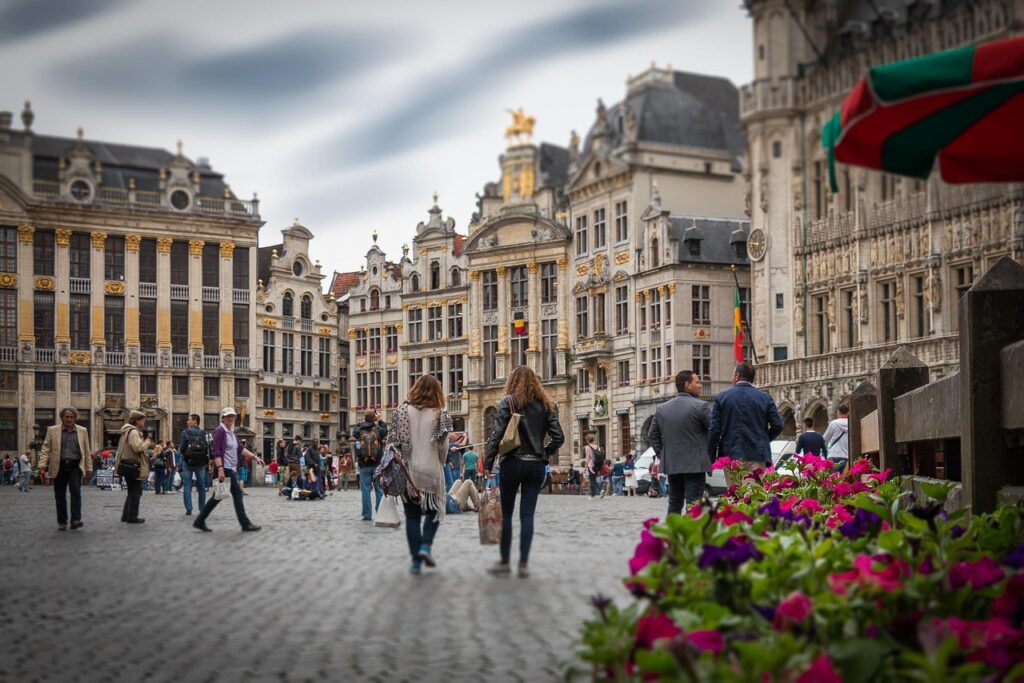
Key regulations: do not ride on sidewalks (except kids on foldable scooters), obey traffic lights and use bike lanes. Motorized scooters must respect the city speed limit (often 20 km/h). Local communes may impose speed‑limit zones or vehicle bans; for instance around the Grand‑Place (Grand-Place / Grote Markt, 1000 Brussels) and nearby pedestrian market areas restrictions usually apply.
Safety: don’t leave valuables visible on a parked bike. For scooters, always lock and end the ride through the app. In case of an accident, dial emergency services at 112; also report the incident to the scooter operator or to Villo! for follow‑up. Important hospitals and first‑aid centers: CHU Brugmann (Place Van Gehuchten 4, 1020 Brussels — Anderlecht/Hermanns), Hôpital Saint‑Pierre (Rue de la Montagne 384, 1000 Brussels).
Local hacks:
- Favor Villo! stations near attractions: Villo! station at Place du Grand Sablon, 1000 Brussels for the Sablon and the antique galleries.
- Buy a STIB pass if you’re staying multiple days — a day pass quickly pays off if you make many trips.
- If you visit the Cinquantenaire museums (Royal Museum of the Armed Forces and Military History, Parc du Cinquantenaire, 1000 Brussels), combine metro + Villo! for a bike‑friendly park entrance.
Conclusion — Summary and final recommendations
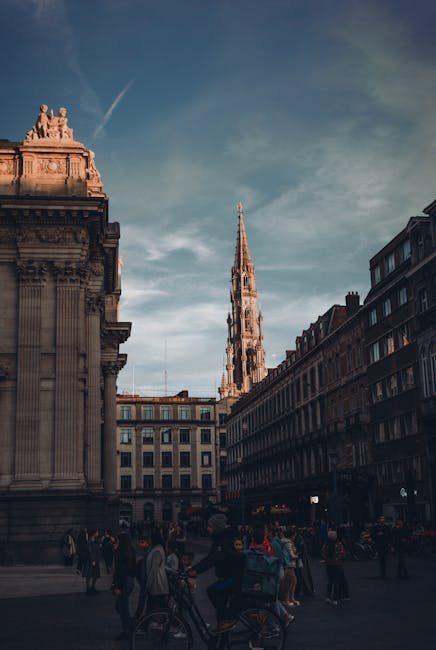
Choosing between metro, bike or scooter in Brussels comes down to your priorities: speed, cost, comfort or experience. The STIB metro remains the backbone for quick, reliable cross‑city travel and is especially handy for inter‑neighborhood trips and bad weather. Biking (Villo! or a private rental) offers unmatched immersion: you can feel the architecture, stop spontaneously and wander through picturesque neighborhoods like the Sablon, the Marolles or Ixelles. Electric scooters are brilliant for the last mile and for shaving minutes off very short, occasional trips — particularly where decent bike lanes exist.
Practically speaking, if you’re a tourist planning several stops in one day, grab a STIB pass for convenience and pair it with a 24‑hour Villo! plan to explore locally. If you’re in a rush or arriving/leaving via Brussels‑Midi (Place de la Gare 1, 1060 Brussels), the metro will save you time. To explore at leisure or take photos, choose a bike and favor cycle lanes like those on Boulevard du Régent or along the canal. If you’re traveling light with short, occasional trips, a scooter gives a fast, flexible option.
A few final recommendations: download the STIB, Villo! and at least one scooter operator app (Dott, Lime or Tier) before you arrive; bring a small lock if you plan to leave a bike for a long stop; follow local rules and always prioritize safety (helmet recommended, stay alert at intersections). Useful addresses to keep handy: Brussels-Central (Place de la Gare, 1000 Brussels), Brussels-Midi (Place de la Gare 1, 1060 Brussels), Parc du Cinquantenaire (Parc du Cinquantenaire, 1000 Brussels), and the Grand‑Place (Grand-Place / Grote Markt, 1000 Brussels). Follow these tips and you’ll get the most out of Brussels, whether you’re commuting or sightseeing.