





Introduction — Getting Around Brussels: an overview of the metro, bike and e‑scooter
Brussels is a dense, multicultural European capital full of contrasts: medieval quarters like the Grand Place (Grand-Place, 1000 Brussels) sit alongside modern office districts and arterial roads. In this urban mix, your choice of transport strongly shapes the experience: speed, cost, comfort, safety and environmental footprint all matter. This comparative guide, aimed at both travelers and locals, takes a close look at the pros and cons of the metro (STIB/MIVB), cycling (Villo! and private bikes) and electric scooters (shared services such as Lime, Dott, Bolt) in Brussels. You’ll find addresses, approximate hours (updated May 2026), indicative prices in euros, vivid descriptions and practical tips for both occasional trips and regular commutes.
The Brussels metro, run by STIB/MIVB (Société des Transports Intercommunaux de Bruxelles / Maatschappij voor het Intercommunaal Vervoer te Brussel), is the backbone of the underground network linking major hubs: Brussels Central Station (Place de la Gare 1, 1000 Brussels), Brussels South / Bruxelles‑Midi (Bruxelles‑Midi / Brussel‑Zuid, Avenue Fonsny 47, 1060 Brussels) and shopping areas like De Brouckère (Boulevard Anspach, 1000 Brussels). Bikes, whether personal or from the Villo! public system (docks across the Brussels-Capital Region), give you maximum freedom to explore tighter neighborhoods like the Marolles (Place du Jeu de Balle, 1000 Brussels) or to ride along the canal. Shared e‑scooters, a more recent arrival, are great for short, quick hops—perfect for that « last mile » between a station and your office or for a spin along Boulevard du Roi Albert II.
Each mode has strengths and drawbacks: the metro shines for speed and capacity during rush hour but can be less convenient for narrow streets or parks; cycling offers a direct, immersive way to experience the city, easy spontaneous stops and low cost but depends on weather and bike infrastructure; e‑scooters combine ease and a fun vibe but raise safety and regulatory issues. In this guide I break these points down in detail, adding useful addresses (Villo! stations, bike parking, scooter charging points), price ranges and typical timetables, plus local tips to avoid common hassles. The goal: give you clear criteria to pick the mode that fits your profile (rushed tourist, daily commuter, family with kids or curious visitor).
1) Brussels metro: speed, network and life underground
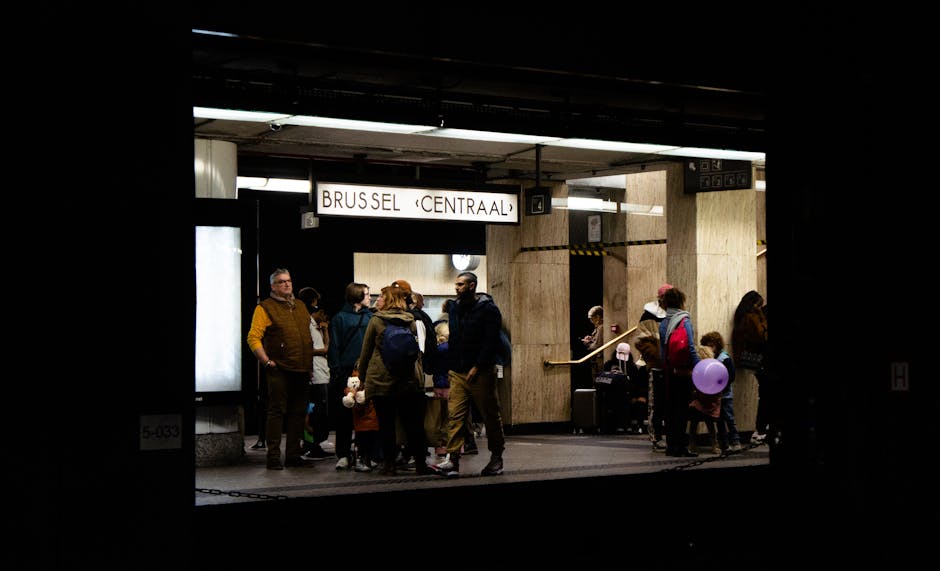
The Brussels metro (STIB/MIVB network) has four lines (M1, M2, M3, M5 depending on current numbering and tram interchanges) and serves the city’s main activity hubs. Key stations and useful addresses: Brussels Central Station — Place de la Gare 1, 1000 Brussels; Brussels South / Bruxelles‑Midi — Avenue Fonsny 47, 1060 Brussels; Schuman Station — Place Jean Rey 1, 1040 Etterbeek (close to European institutions). Trains typically run between 05:30 and 00:30 on weekdays; service can be extended for events or some weekends (check STIB/mivb.be or the official app).
Price: single STIB ticket (one trip): €2.50 (indicative, standard fare May 2026). Options: rechargeable MOBIB card (handy for multiple trips); 24‑hour ticket: around €7.50 (valid 24 hours from first validation across STIB/MIVB networks). Monthly and annual passes exist for commuters (e.g. monthly STIB passes range roughly €30–€60 depending on plan and discounts). Major stations have ticket machines that accept cards and cash.
Advantages: fast across long north–south crossings, unaffected by car congestion, good interchange with trams and buses, large capacity (handy for groups). Stations like De Brouckère (Boulevard Anspach, 1000 Brussels) or Arts‑Loi (Boulevard du Régent / Wetstraat) are major junctions. The metro is also reasonably secure, with staff and cameras in central stations.
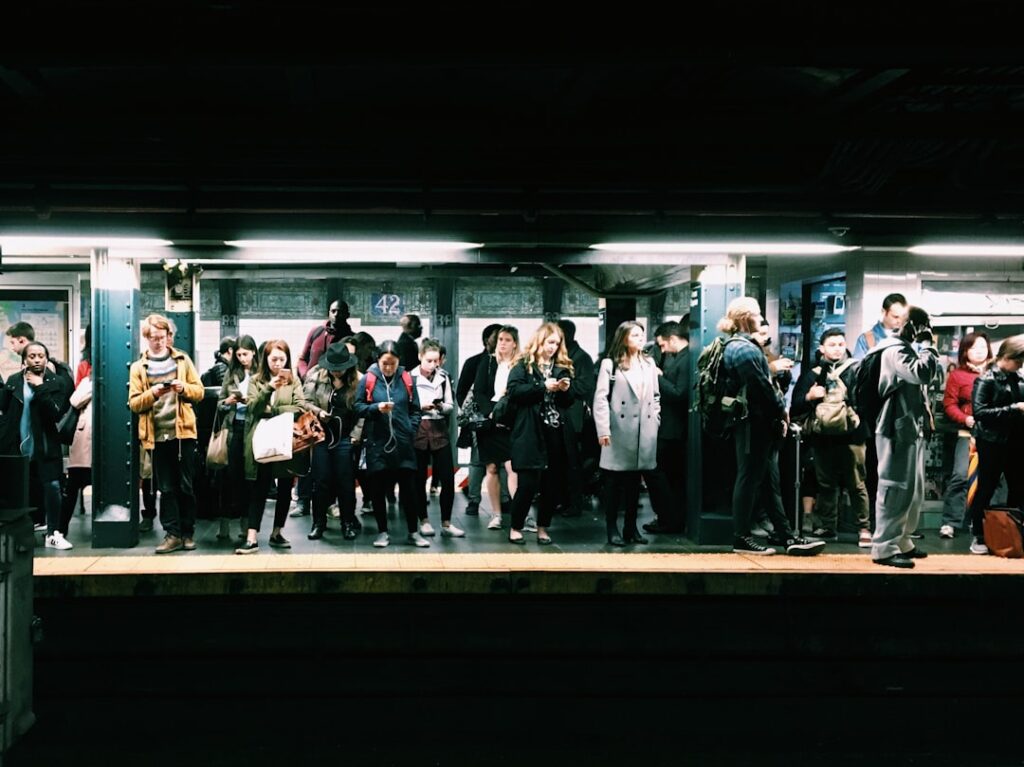
Drawbacks: steps and staircases in some older stations (allow an extra 5–10 minutes if you have luggage), occasional night closures for maintenance, heavy crowding at rush hours (07:30–09:30 and 16:30–19:00). Also, if your destination is a pedestrian street or a park (e.g. Parc du Cinquantenaire — Parc du Cinquantenaire, 1000 Brussels), you’ll often need a « last mile » by bus, tram, bike or scooter.
- Local tip: buy a rechargeable MOBIB card if you’re staying more than three days; it saves queuing and can unlock better fares for multiple journeys.
- Safety tip: keep your belongings in front of you on trains and avoid empty carriages late at night; stick to central cars which are usually busier.
2) Bike and Villo!: freedom, health and bike routes
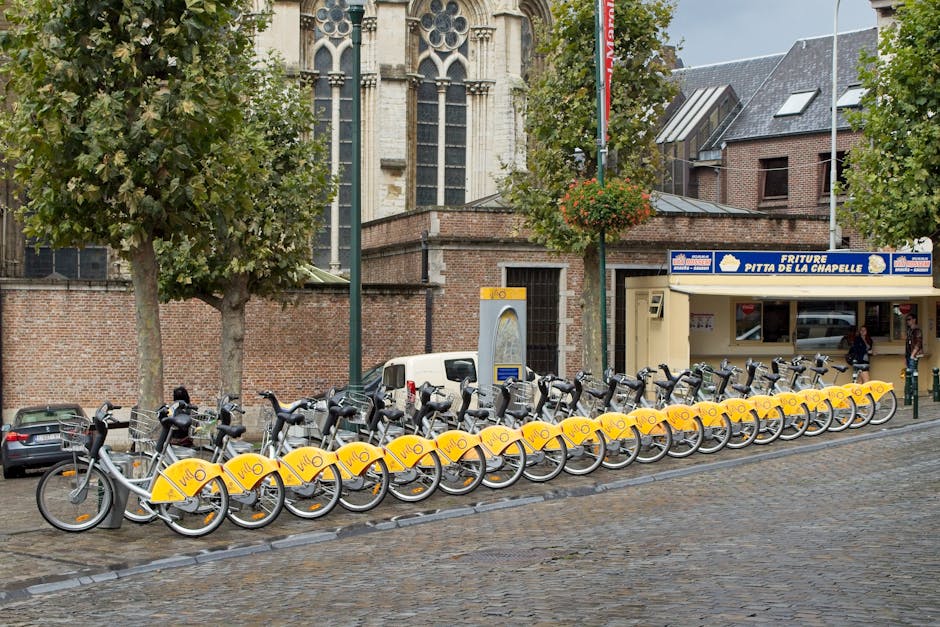
Cycling is an excellent way to explore Brussels at your own pace. The public Villo! system (www.villo.be) has stations across the city, with popular points near Brussels Central Station (Place de la Gare 1, 1000 Brussels), Place du Jeu de Balle (Place du Jeu de Balle, 1000 Brussels) and Louise station (Avenue Louise 65, 1050 Ixelles). Villo! operates 24/7; docks show real‑time availability via the app. Indicative prices (May 2026): annual subscription around €19.00 (lower citizen rate may apply); short‑term hires: the first half hour is free under some subscriptions, then €0.50 per 30‑minute block; pay‑as‑you‑go by card varies by offer (check the app).
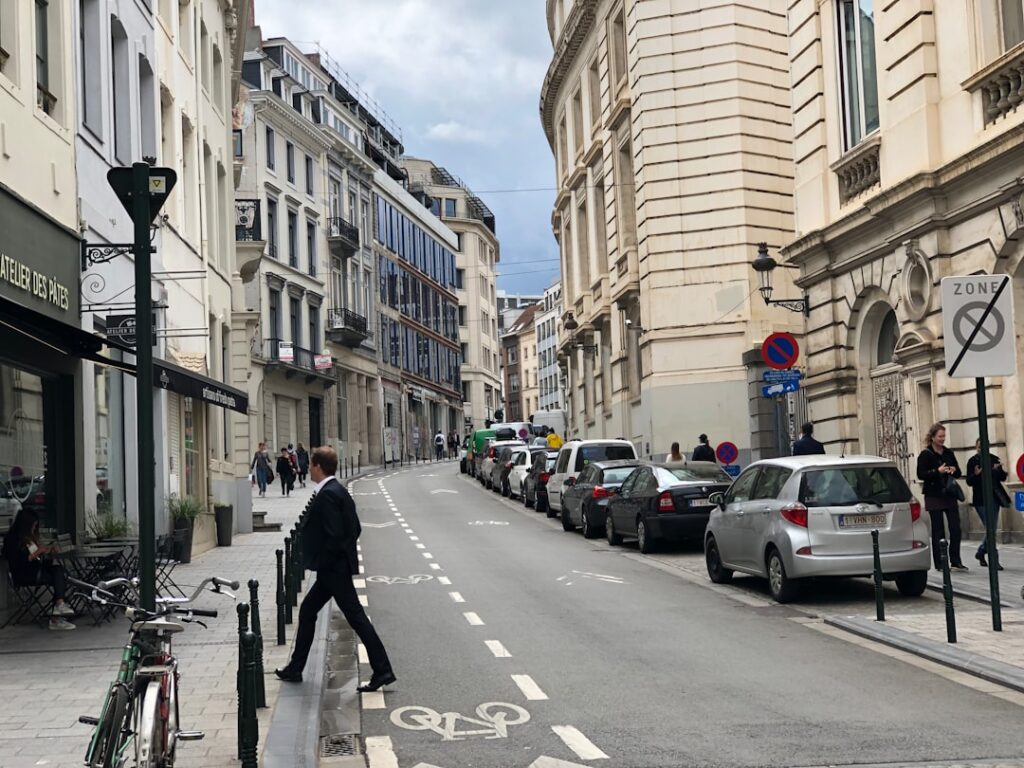
Advantages: total freedom to stop, ride along the canal, climb up to the Koekelberg Basilica (Parvis de la Basilique 1, 1081 Koekelberg) or tour the European Quarter. Biking helps avoid traffic, cover inter‑neighborhood trips (2–6 km) efficiently and experience the city up close: market smells, Art Nouveau facades along Rue Antoine Dansaert (Rue Antoine Dansaert, 1000 Brussels), cozy cafés. Brussels has upgraded many cycle lanes—especially on Boulevard Anspach and along major avenues—but infrastructure quality still varies by municipality.
Drawbacks: Belgian weather (frequent rain) can make cycling less appealing on some days; historic cobbles (Marolles, Grand Place) are bumpy; theft and vandalism are real concerns—always lock your bike with two U‑locks in riskier areas. The hills around Koekelberg Basilica and Parc du Cinquantenaire require a bit of effort unless you use an e‑bike.
- Local tip: for trips of 3–5 km, a bike is often faster than the metro or car. Stick to cycle lanes (e.g. the route along Boulevard du Roi Albert II) and avoid congested arteries during peak times.
- Safety: wear a reflective vest and a helmet if you can; obey lights and signals for your safety and that of pedestrians.
3) Free‑floating electric scooters: flexibility vs rules and risks
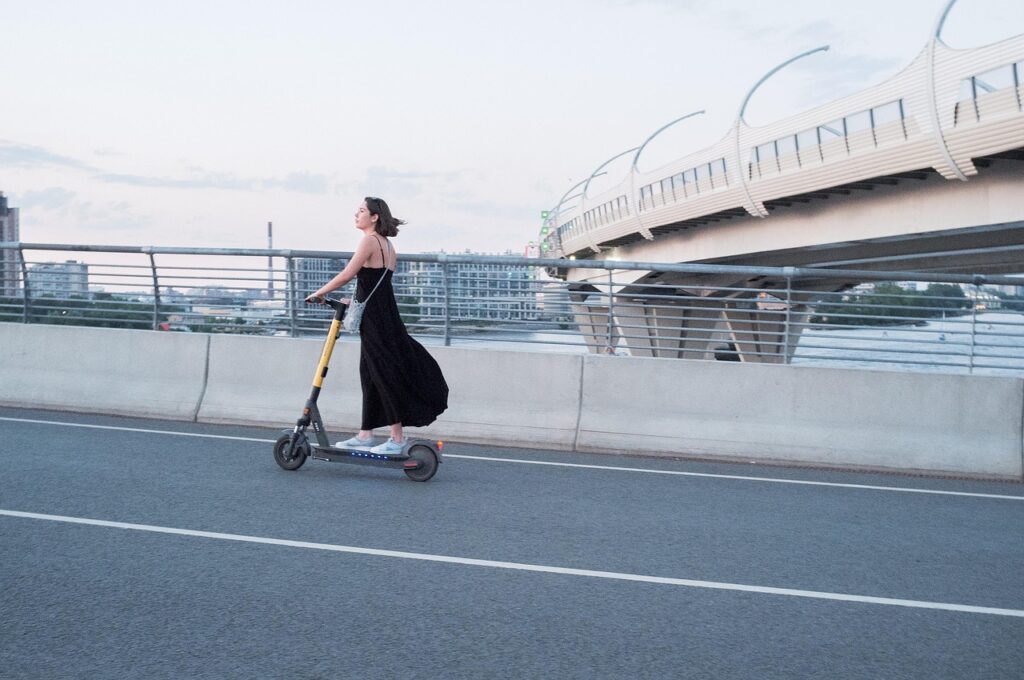
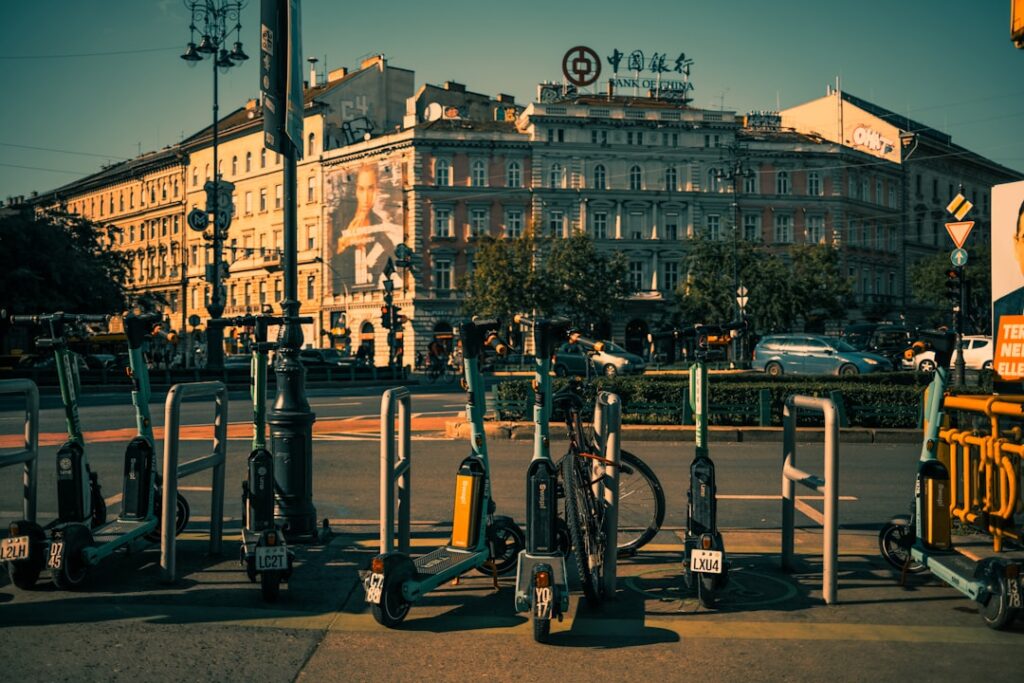
Shared electric scooters (operators such as Lime, Dott, Bolt, Tier depending on availability) have multiplied across Brussels. They’re unlocked via apps, GPS‑tracked and often found near spots like Brussels Central Station (Place de la Gare 1, 1000 Brussels), Louise station (Avenue Louise 65, 1050 Ixelles) or Parc du Cinquantenaire (Parc du Cinquantenaire, 1000 Brussels). Availability and hours: generally 24/7 depending on the operator, though availability can drop overnight for maintenance. Indicative prices (May 2026): typical model — ~€1.00 unlock fee + €0.19–€0.25 per minute. A 10‑minute ride will usually cost around €2.90–€3.50.
Advantages: perfect for the « last mile », quick to deploy, easy to use (QR code unlock). Great for flat areas and short hops (1–4 km): getting to a meeting near Place Royale (Place Royale, 1000 Brussels) or scooting along the canal quays. Scooters are compact and mean you don’t have to hunt for a bike docking station.
Drawbacks: safety concerns — scooter accidents are common (falls, collisions). Mixed bike lanes aren’t always ideal. Strict rules apply: riding on sidewalks is prohibited (fines possible), and speed limits vary by zone (e.g. 20 km/h in pedestrian areas or near schools). Improper parking is an urban headache: park scooters in designated zones or near bike racks to comply with local rules. Also, per‑minute costs can add up on longer trips.
- Local tip: for distances over 3–4 km, compare the combined cost of metro + walking versus a scooter; often, metro + scooter for the last mile is most efficient.
- Safety: wear a helmet if possible, stay visible and respect speed limits; be extra cautious at night and on wet surfaces.
4) Head‑to‑head scenarios, practical tips and useful addresses
To pick between metro, bike and scooter, weigh the scenario: distance, weather, luggage, time of day. Here are typical situations and the recommended option.
– Scenario 1 — Sightseeing tourist with no luggage, visiting the Grand Place (Grand-Place, 1000 Brussels), the City Museum (Maison du Roi, Grand-Place) and wandering the Marolles: favor walking or biking. Nearest Villo! dock: Place du Jeu de Balle (Place du Jeu de Balle, 1000 Brussels). Upside: freedom to stop for photos and explore directly. Downside: cobbles.
– Scenario 2 — Commuting from Brussels South station (Gare de Bruxelles‑Midi, Avenue Fonsny 47, 1060 Brussels) to the European Quarter (Schuman, Place Jean Rey 1, 1040 Etterbeek) at 08:00: choose the metro for speed. Expect 20–30 minutes depending on transfers. Note: lines can be packed during peak times.
– Scenario 3 — Work meeting at 09:00 on Rue du Luxembourg (Rue du Luxembourg, 1000 Brussels) with a sunny afternoon: combining train + scooter/bike for the last mile gives flexibility and speed. Check scooter parking zones, and if you bring your own bike, use a secure bike stand.
Addresses and support points:
- STIB Customer Service (Office): Rue Royale 76, 1000 Brussels — opening hours vary; see www.stib-mivb.be for real‑time info.
- Villo! central info: Rue du Progrès 80, 1030 Schaerbeek (technical office) — services via www.villo.be.
- Lime/Dott/Bolt stations — restocked through their apps; on‑the‑ground signage shows authorized parking zones.
More local tips: avoid cycling in heavy rain when possible, plan routes via Google Maps or the STIB app for live connections, and carry a power bank if you rely on apps to unlock scooters. Respect local signs and regulations: some municipalities (Ixelles, Saint‑Gilles) have specific rules for parking shared vehicles.
Conclusion — Choose by priority: speed, fun or budget
The metro, bike and e‑scooter offer three complementary answers to mobility in Brussels. The metro delivers reliability and speed over longer distances and at peak times: it’s the public transport backbone, ideal for linking stations (Brussels Central Station, Place de la Gare 1, 1000 Brussels; Brussels South / Bruxelles‑Midi, Avenue Fonsny 47, 1060 Brussels) and business districts. Bikes, whether private or via Villo!, provide a more immersive, eco‑friendly and flexible experience—perfect for inter‑neighborhood trips and sightseeing at a human pace. Electric scooters excel at the last mile and short, quick hops, though they require care and adherence to rules to avoid fines and incidents.
For most visitors, a mixed strategy works best: use the metro for longer legs, hop off to bike through historic areas and top up with a scooter for short trips between stations and offices. Don’t forget to check timetables (metro generally 05:30–00:30), get a MOBIB card or suitable passes, and factor in the weather. These choices affect not just your budget (single metro ticket ≈ €2.50, scooter ≈ €1.00 + €0.19–€0.25/min, Villo! annual ≈ €19.00) but also your comfort and safety.
In short: plan by distance, anticipate the weather, safeguard your belongings and follow local rules. Brussels is well suited to intermodal travel—With a bit of planning you can make the most of each transport option for a smoother, more enjoyable and responsible urban experience.