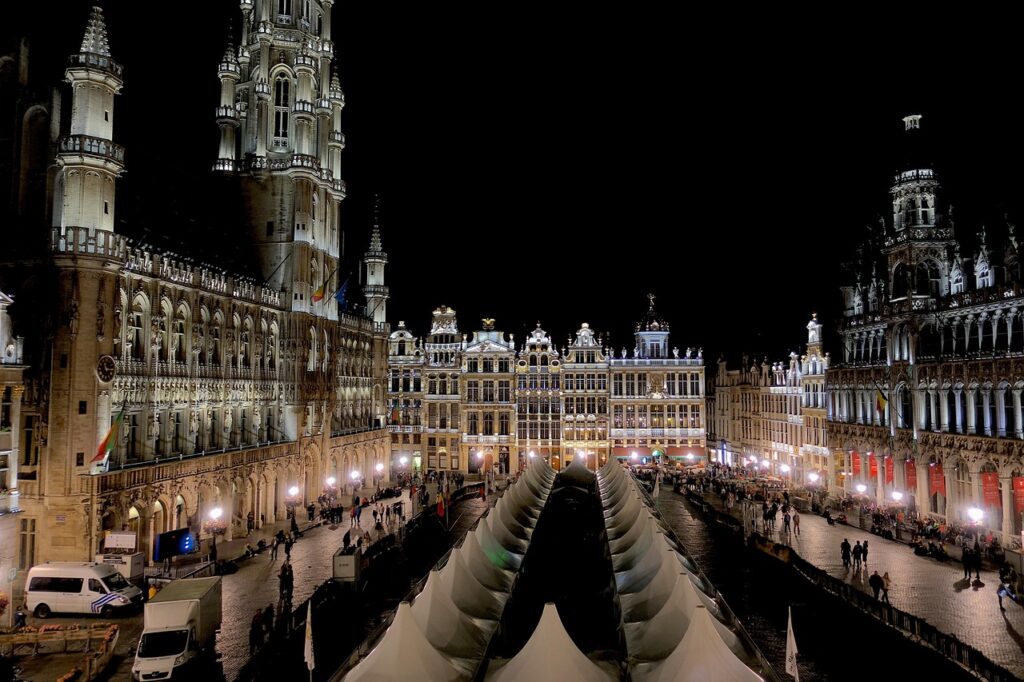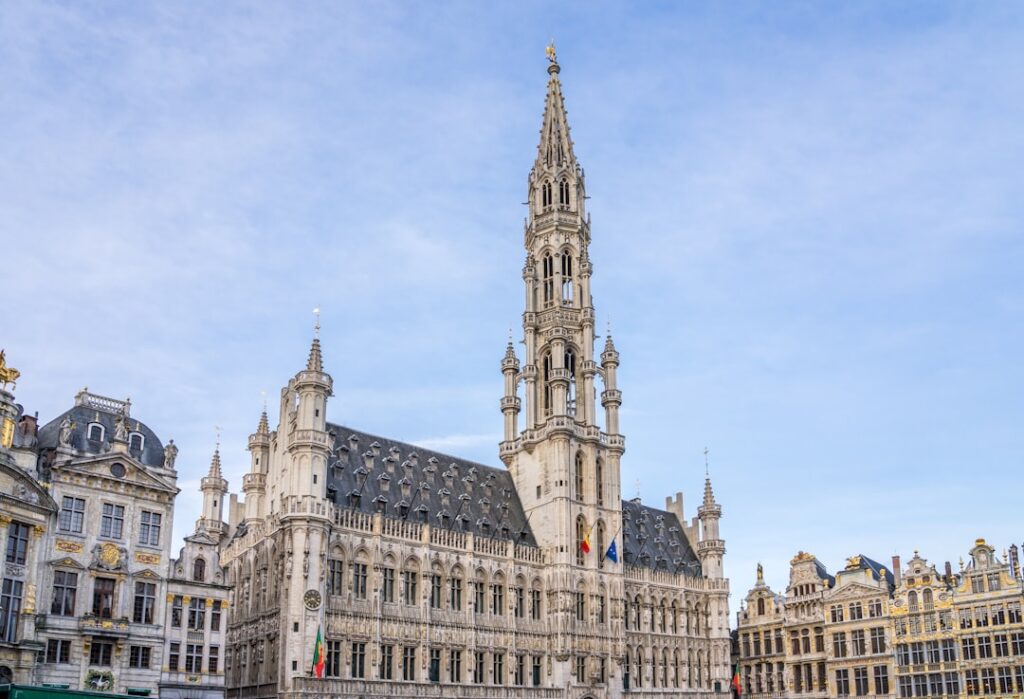






Introduction — Exploring Brussels’ Grand-Place: where history, architecture and city life meet
At the heart of Brussels, the Grand-Place (Grote Markt) is much more than a square: it’s a living stage where centuries of history, baroque and gothic façades, merchant guilds and contemporary events all come together. A UNESCO World Heritage site since 1998, the Grand-Place is the symbolic and tourist center of Belgium’s capital. Strolling here is like reading the city’s story in relief: feeling the seasons through markets and events, and soaking up an atmosphere that’s at once grand and welcoming.
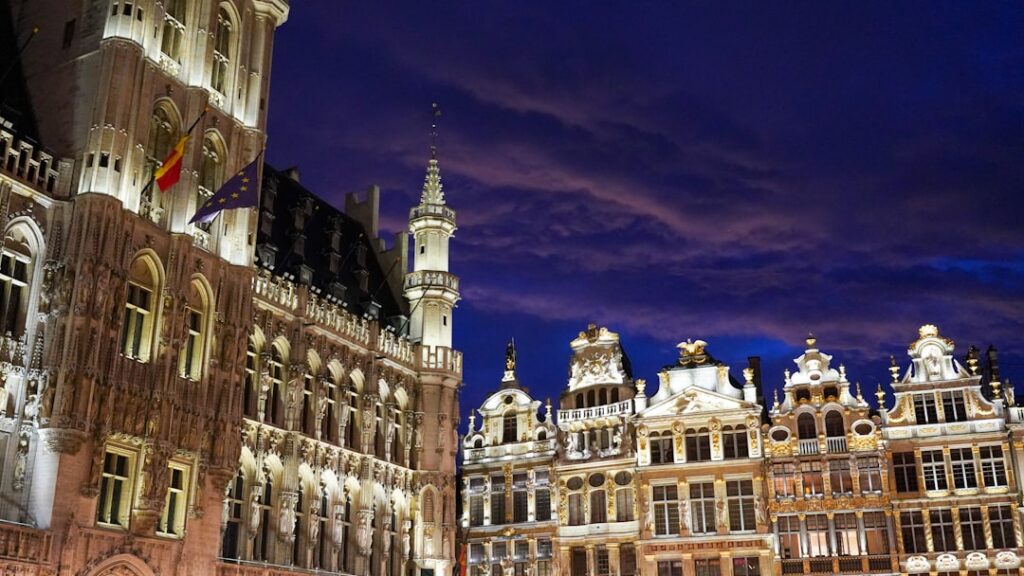
This introduction is your gateway to a full, practical and immersive guide: precise addresses, opening hours, entrance fees (with notes when they may change), detailed architectural descriptions, local tips to avoid the crowds, perfect photo moments, and recommendations for nearby spots just a few steps away. Whether you’re short on time, an architecture enthusiast, a photographer or a family out for a stroll, this guide will help you make the most of your visit to the Grand-Place.
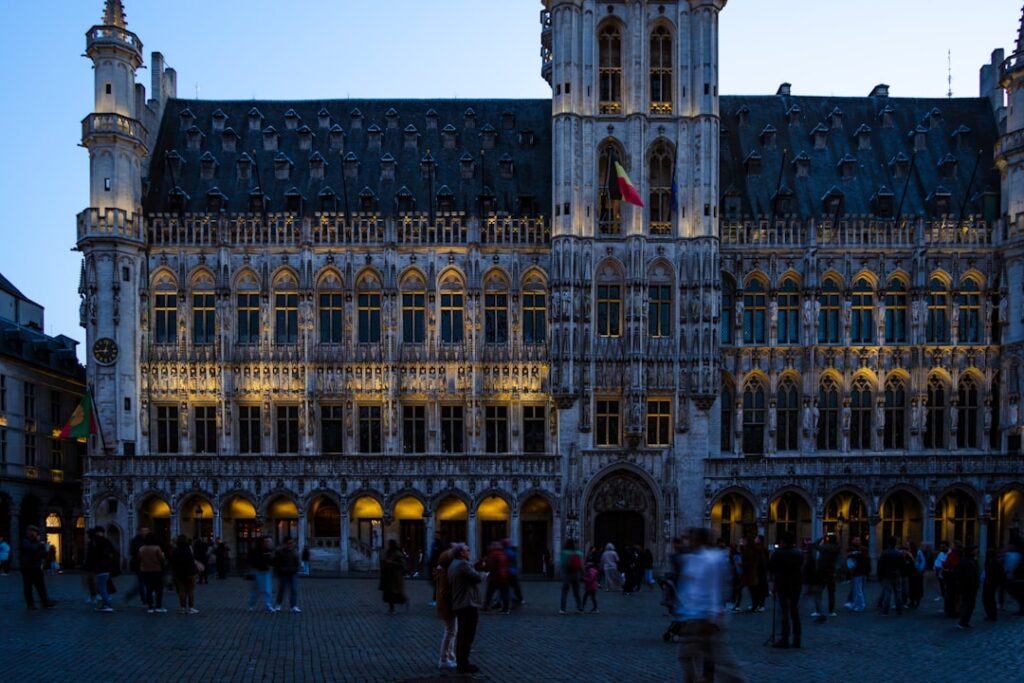
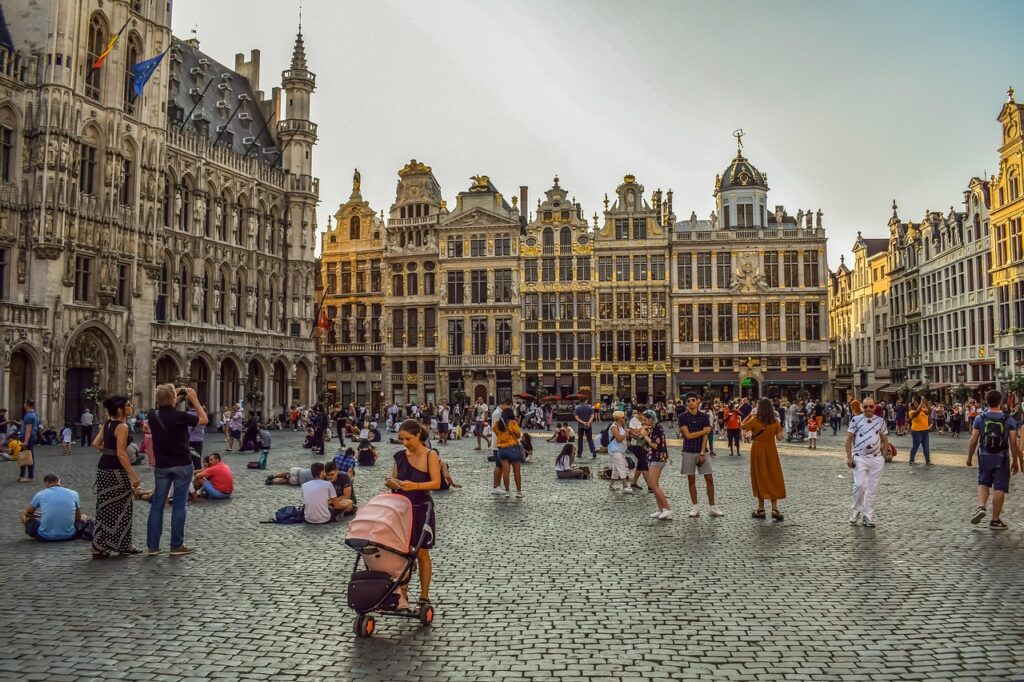
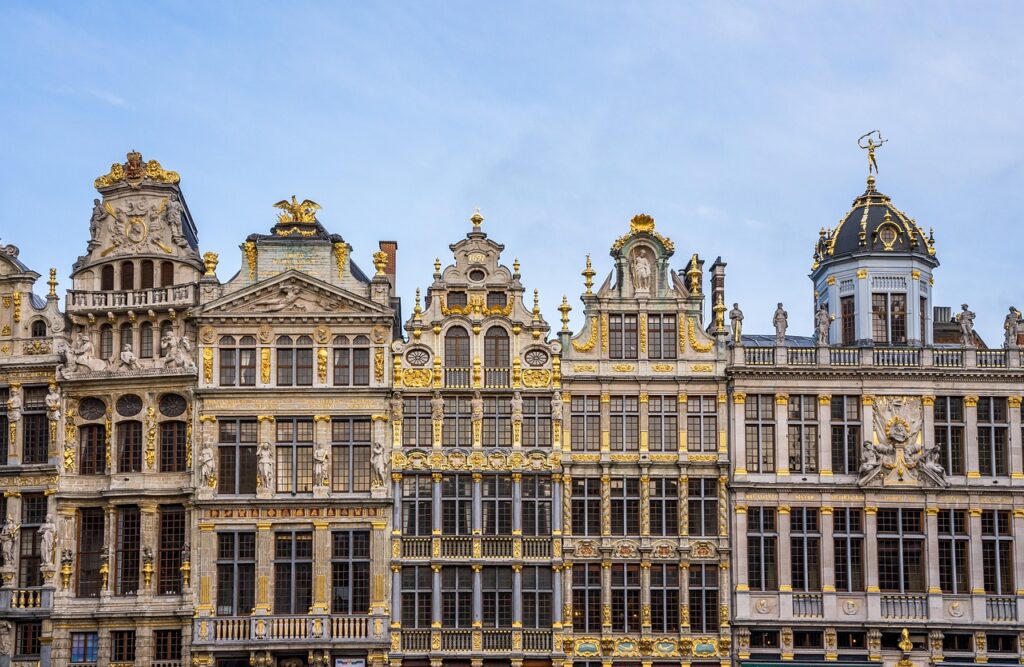
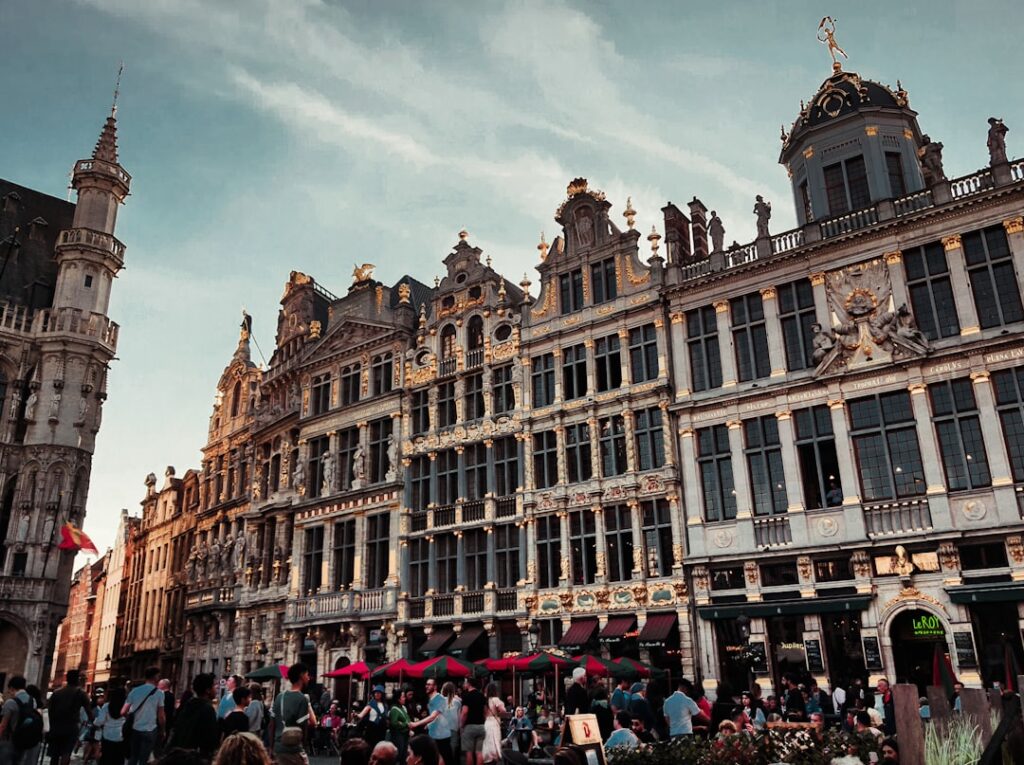
The Grand-Place is framed by a harmonious ensemble of stunning buildings: the remarkable Brussels Town Hall (Hotel de Ville), the King’s House or Broodhuis housing the Brussels City Museum, and a string of guild houses (the old merchant houses) whose names — King’s House, Brewers’ House, Bakers’ House, House of the Pigeon — tell the story of the city’s economy and social life. These façades are trimmed with gold, statues, sculpted pediments and slate roofs: examine them closely and you’ll spot the craftsmen’s attention to detail and the drive to display power and prestige.
This guide aims to be practical: each major site is presented with its full address (number, street name, postal code, city), typical opening hours, the entry price at the time of writing, concrete visit tips (access, stairs or elevator, viewpoints), as well as local advice — for example, the least crowded time for photos or the best terrace for coffee while watching the square. We’ll also cover recurring events like the Flower Carpet, the winter illuminations and the seasonal fair.
Finally, the Grand-Place is a microcosm of Brussels: markets, chocolatiers, historic cafés and little side streets that open up as invitations to explore further — toward the Royal Gallery, Place Sainte-Catherine, or the Sablon districts. By the end of this guide you’ll have not only the addresses of must-see places but also a mental map for a smooth, rewarding visit tailored to what you want to experience.
History and evolution: from medieval market to baroque restorations
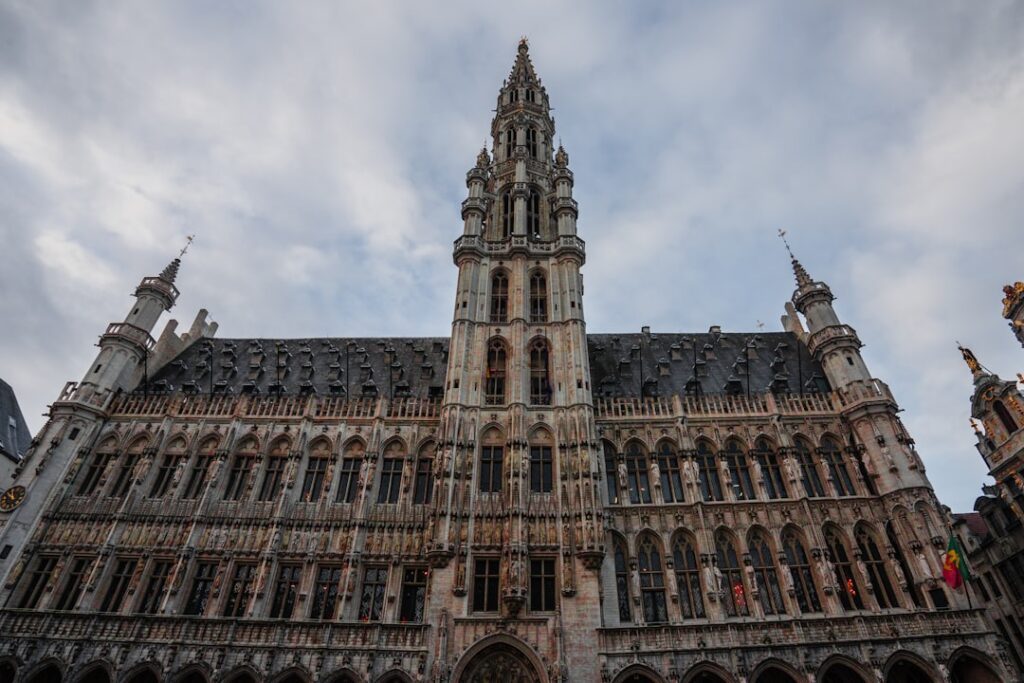
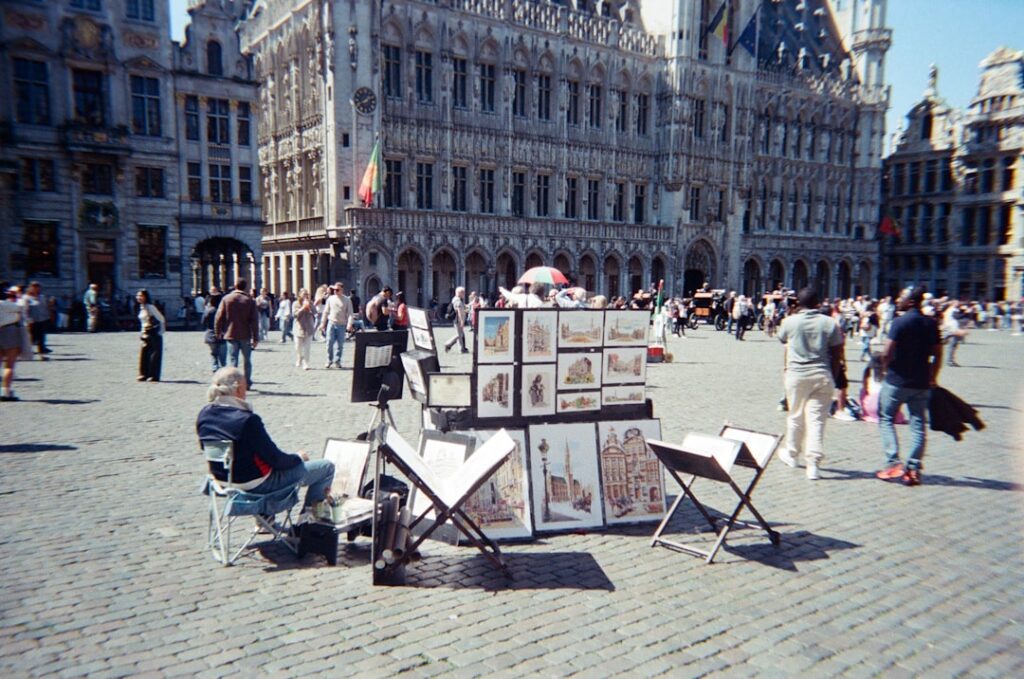
The Grand-Place of Brussels grew gradually from the 12th century on a site that originally served as the central market. Its Dutch name, Grote Markt, recalls that fundamental role. The square underwent a major shift in the 13th and 14th centuries, when initial wooden structures were replaced by stone buildings that evolved into public and guild constructions. The most emblematic element from this medieval period is today’s Brussels Town Hall, whose gothic tower, raised in the 15th century, still commands the square.
Wars and fires have left deep marks on the square’s appearance. The most devastating event was the 1695 bombardment, when the French army shelled Brussels, setting alight almost all the buildings surrounding the Grand-Place. The reconstruction that followed, heavily influenced by Flemish baroque, was remarkable: guilds rebuilt richly decorated houses, often with gilded façades and statuary. It’s this post-1695 rebuilding that gives the Grand-Place its cohesive and dazzling look today, even though each façade retains unique features and symbols tied to the trades they represented (brewers, bakers, goldsmiths, etc.).
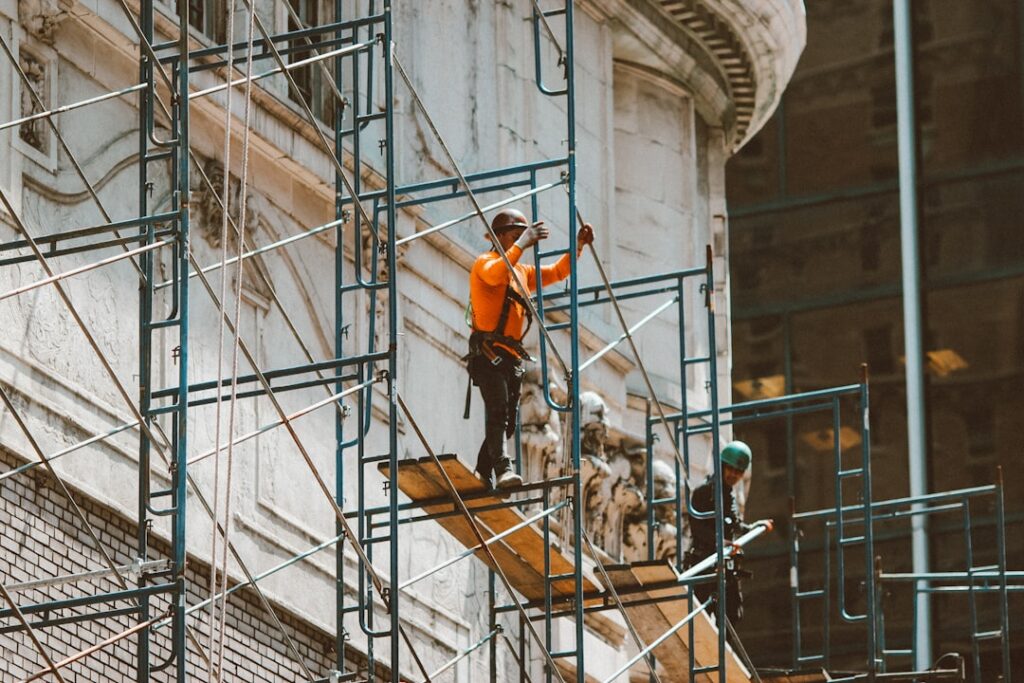
In the 19th century the Grand-Place became a national symbol as Belgium built its identity; significant restorations were undertaken to preserve the ensemble. The 20th century strengthened this heritage role with systematic conservation work and cultural policies to protect the site. In 1998, the UNESCO listing confirmed the square’s outstanding universal value.
Understanding this history helps you appreciate the Grand-Place beyond its immediate beauty: every cornice, statue and gilded sign tells stories of commercial ambition, resilience in the face of destruction and collective identity. During your visit, take time to read the explanatory plaques, visit the Brussels City Museum (King’s House), and, if possible, join a guided tour of the Town Hall to see the gothic interiors — painted ceilings, carved staircases and the gothic council chamber reveal another layer of historic preservation.
Must-see monuments: Town Hall, King’s House and the guild houses
The Grand-Place is surrounded by major buildings you should know about before you go. Here’s an overview of the key sites, with addresses, opening times and indicative prices:
- Brussels Town Hall (Hôtel de Ville)
Address: Hôtel de Ville, Grand-Place, 1000 Brussels, Belgium.
Hours: guided tours are generally offered Tuesday to Sunday; times vary — common sessions at 10:30, 11:30, 14:30 and 15:30. During winter or public holidays, visits may be limited. Allow around 45–60 minutes for a full guided tour.
Price: about €8 to €10 for adults (reduced rates for students and seniors, free or symbolic fees for children depending on programs). Booking is strongly recommended via the City of Brussels site or the Tourist Office.
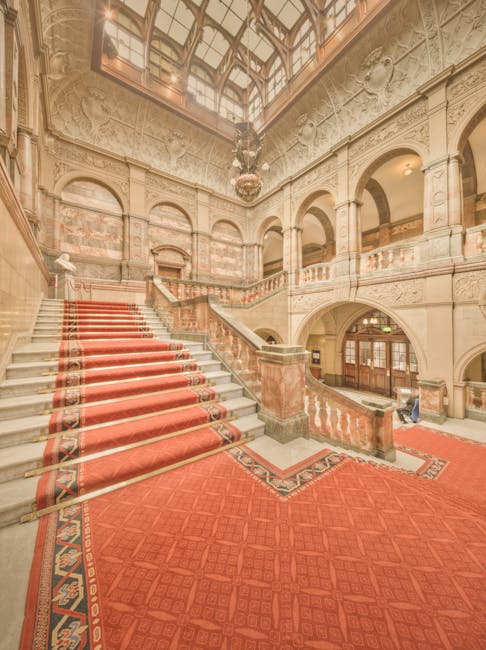
Description: a gothic masterpiece with a 96-meter tower, richly carved façades, and interiors adorned with tapestries and paintings. Inside you can admire the grand staircase, the council chamber and the tapestry gallery. - King’s House (Broodhuis) — Brussels City Museum
Address: King’s House, Grand-Place, 1000 Brussels, Belgium.
Hours: generally open Tuesday to Sunday from 10:00 to 17:00 (closed on Mondays). Last admission usually 30 minutes before closing.
Price: entry approx. €8 to €10 for adults; discounts for students and groups, occasional free entry for children under 12 (check at reception).
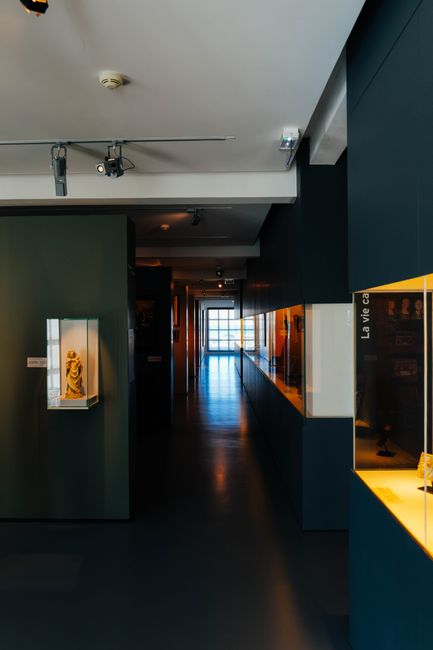
Description: once a bread hall, now a museum focusing on the history and life of Brussels — including Manneken-Pis costumes, scale models and archives. Temporary exhibitions are regularly held. - Guild houses (Guildhouses)
Addresses: façades lining the Grand-Place (Grand-Place, 1000 Brussels) — each carries a historic name (Brewers’ House, Bakers’ House, House of the Golden Boat, etc.).
Hours: most are home to cafés, restaurants or offices and are viewable from the outside at all times. Some house museums, eateries or shops with their own opening hours (often 09:00–19:00 for commerce/cafés).
Price: exterior viewing is free; entry into commercial establishments depends on purchase or admission fees. Some houses offer private tours or host events (prices vary).
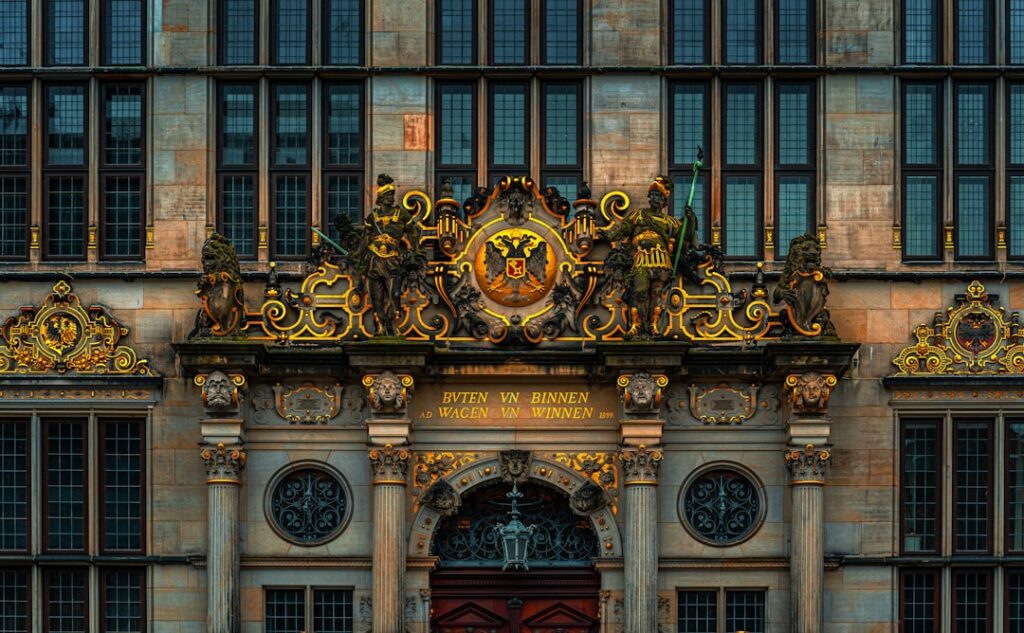
Description: richly decorated baroque façades, gilded pediments and allegorical statues. Look for coats of arms and inscriptions that tell the story of each guild’s trade.
Practical tip: to photograph the north façade (where the Town Hall is most visible), get there early in summer around 07:30–08:30 to beat the crowds and enjoy soft light. The south side often hosts café terraces; if you want a clear view, head into the adjacent lanes (Rue des Chapeliers, Rue Charles Buls) for more original angles. Note the Grand-Place is predominantly pedestrian, paved and can be slippery in winter: wear comfortable shoes.
Practical visits, events and recommended spots around Grand-Place
Visiting the Grand-Place also means planning smartly. Here’s practical information to optimize your visit, with useful services and local recommendations:
- Brussels Tourist Office (Visit Brussels)
Address: King’s House / Grand-Place, 1000 Brussels (information stand on the square and main office a few streets away).
Hours: often open daily, roughly 09:30–18:30 in high season; reduced hours in low season.
Services: maps, guided-tour tickets, audio guides, museum and show bookings. - Best times and key events
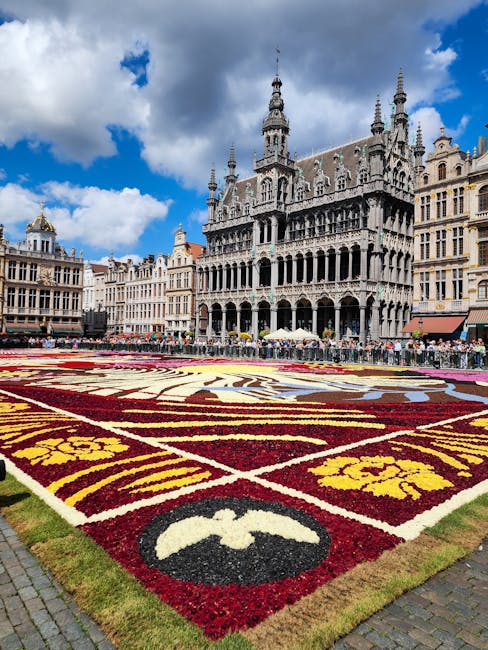
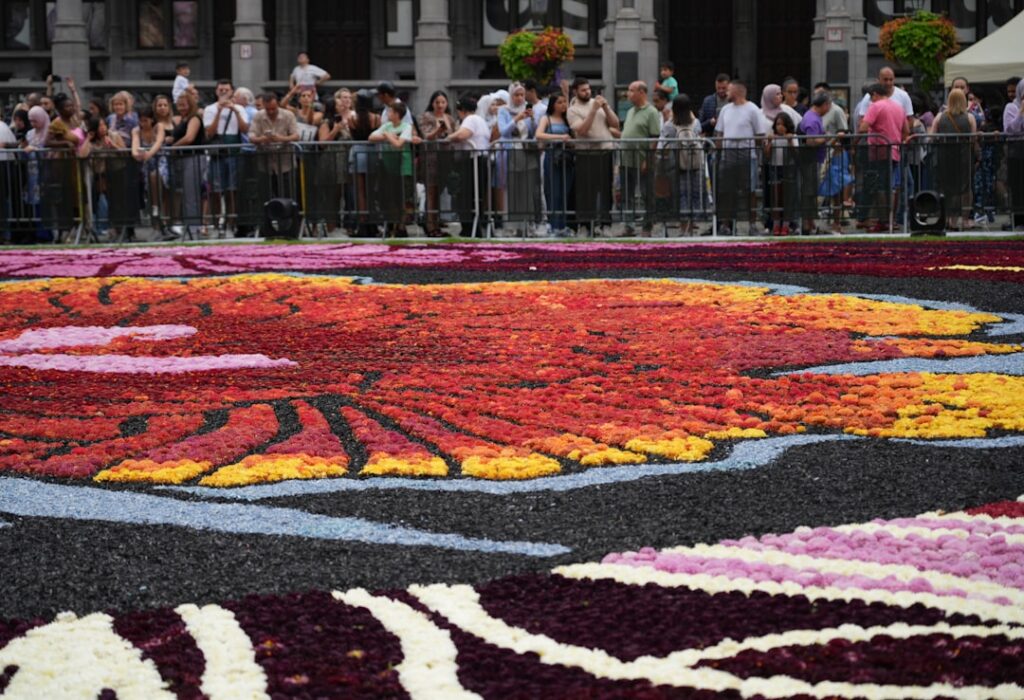
– Flower Carpet: held every two years in August, the Grand-Place is covered with a carpet of begonias laid out in a themed pattern; the event lasts around 3–4 days. Access to the square is free, though some viewing areas are ticketed and related exhibitions may have fees.
– Christmas lights and Winter Market: late November to early January; times vary, often 11:00–22:00. Nightly sound-and-light shows add to the atmosphere.
– Music festivals and summer concerts: occasional programming on the square. Check the municipal calendar for dates. - Historic restaurants and cafés
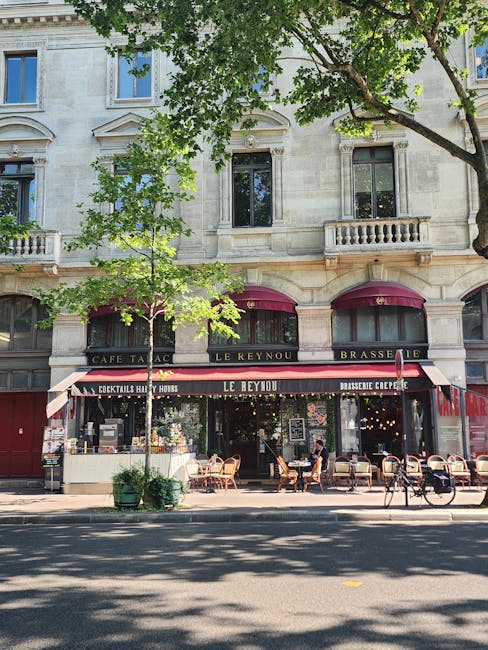
– Le Roy d’Espagne, Grand-Place, 1000 Brussels — terrace overlooking the square. Traditional cuisine and Belgian dishes. Prices: main courses approx. €15–€30.
– À la Mort Subite (historic brasserie) — a short walk from the Grand-Place; classic Belgian beers and an Art Nouveau interior.
Tip: favor the side streets for better value — venues on the square often charge a premium for the view. - Getting there and mobility
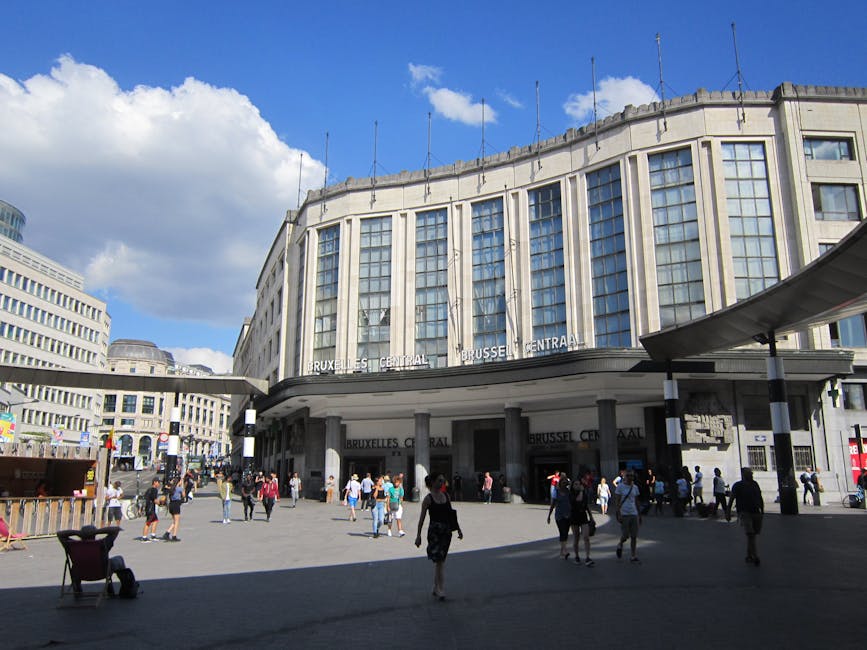
Nearest metro station: Bourse/De Brouckère (De Brouckère), roughly a 4–6 minute walk. Major train station: Brussels-Central (Bruxelles-Central), about 2–3 minutes on foot from the Grand-Place.
Accessibility: the square is cobbled and sometimes uneven; most historic buildings lack elevators. For visitors with reduced mobility, check with the Tourist Office about adapted access and special visit arrangements.
Suggested route and local tips for a memorable visit
Here’s a practical itinerary to get the most out of a 2–3 hour visit to the Grand-Place, plus insider tips:
- Start early: arrive between 08:00 and 09:00 to enjoy an almost empty Grand-Place — perfect for photos without the crowds. Breakfast is possible at a café on the square (e.g. Le Roy d’Espagne) or in a nearby lane for better value.
- Inside visits: book a guided tour of the Town Hall in advance (allow 45–60 minutes) and set aside 45–60 minutes for the Brussels City Museum (King’s House). That covers the cultural and historical highlights.
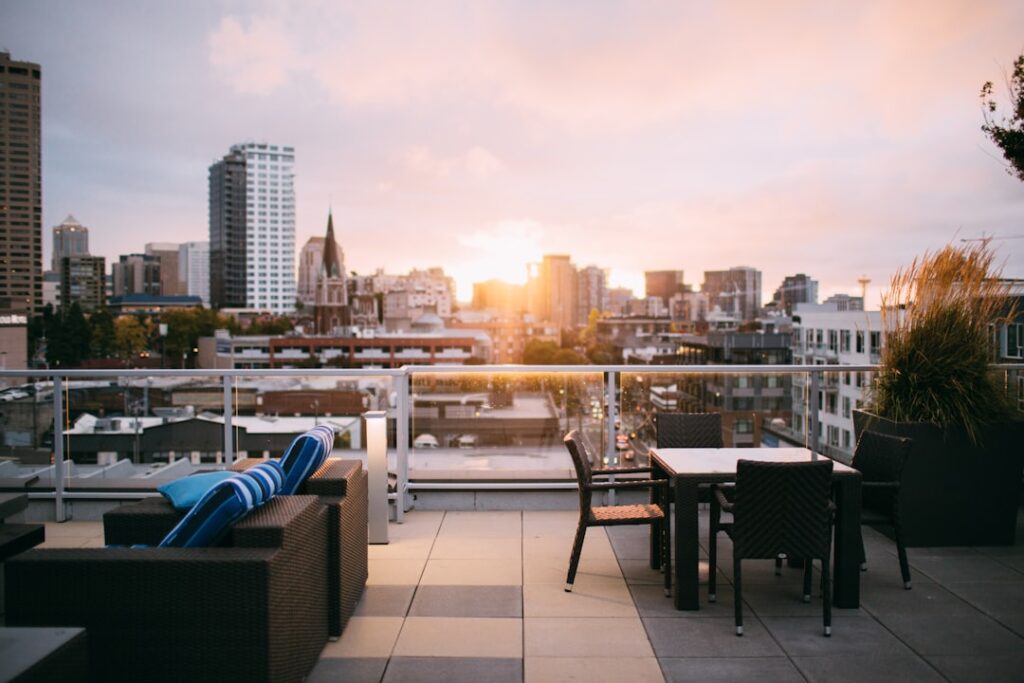
- Walk and scout: circle the square, look closely at every façade, and note the house names (e.g. King’s House, Bakers’ House, Brewers’ House). For a higher vantage point and a broader view, head up to a rooftop terrace if publicly accessible — some restaurant terraces offer panoramic views.
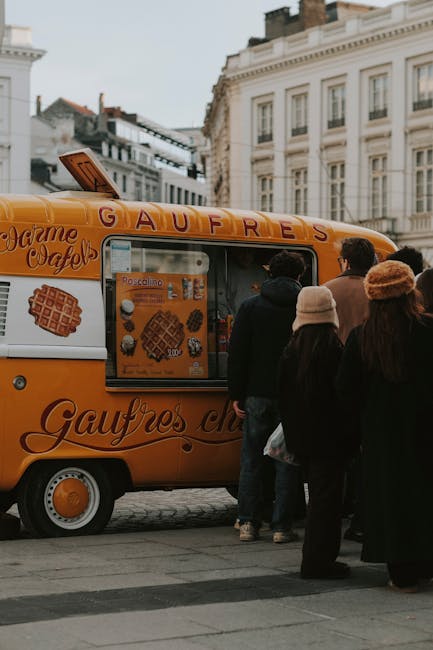
- Food treats: don’t miss the chocolatiers and waffle sellers nearby — waffles typically cost between €3 and €7 depending on toppings. For Belgian chocolate, expect €8–€20 for a box or a guided tasting at a well-known shop.
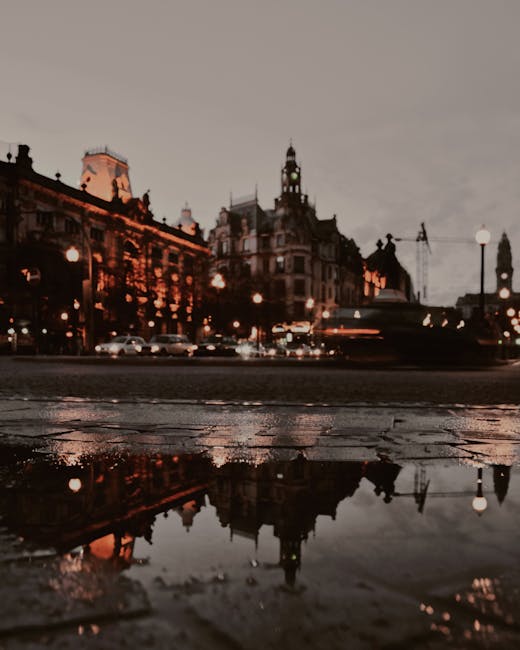
- Evening: the Grand-Place lights up beautifully at dusk; if you stay, check illumination times (often around 21:00 in summer, varying by season). Occasional concerts and projections make the night especially magical.
Extra practical tips: avoid the peak tourist window (11:00–15:00). Carry a water bottle and wear shoes suited to cobbles. Watch out for pickpockets in busy areas and prefer card payments in shops to avoid handling cash. For a more intimate experience, visit on a weekday morning outside school holidays.
Conclusion — Why the Grand-Place is unmissable and how to extend your visit
The Grand-Place of Brussels is a must-see because it brings together layers of history, sumptuous architecture and a lively urban pulse in one place. Walking the square from cobbles to carved roofs, you cross centuries of history: medieval trade, the rise of guilds and the baroque reconstructions that shaped its current face. Each visit reveals new details — a statue, an inscription, a gilded highlight — that deepen your understanding of Brussels.
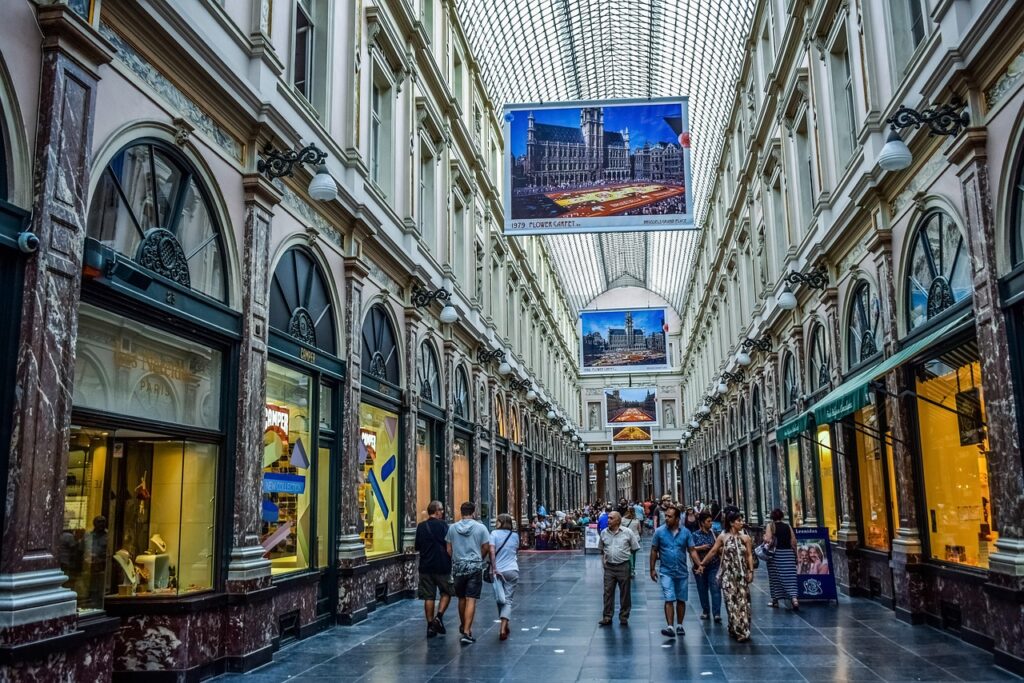
To prolong the experience beyond the square, explore the surrounding streets: the Royal Gallery (Galeries Royales Saint-Hubert) for elegant shops and chocolatiers, the Sablon quarter for antique dealers and top chocolatiers, and nearby museums like the Magritte Museum (Rue de la Régence 3, 1000 Brussels) for a dive into modern Belgian art. If you have time, head to Place Sainte-Catherine for seafood, or discover the Marolles district for flea markets and a more local atmosphere.
Ultimately, visiting the Grand-Place is more than a quick photo stop: it’s a historical and sensory immersion. Plan your indoor visits (Town Hall, City Museum), check event dates (Flower Carpet, lights) and time your visit to enjoy the calmest moments. Bring comfortable shoes, a camera or a sketchbook, and let the façades and friendly cafés guide you. You’ll leave with striking images, stories and, very likely, the urge to come back — because the Grand-Place reinvents its charm with every season.